Exposed-Fastener Panels
7/8 Corrugated Metal Panel for Commercial Siding and Longer Spans
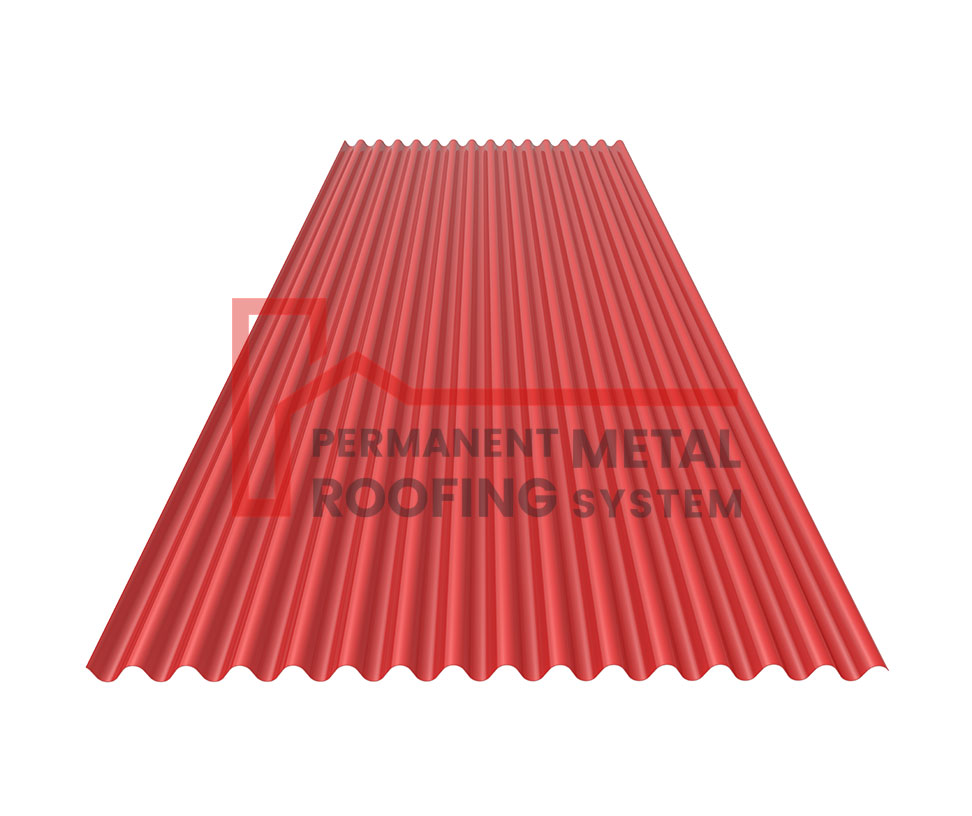
The 7/8 corrugated metal panel keeps the classic 2.67-inch corrugation spacing but deepens each wave to 7/8 inch. That extra depth makes the sheet noticeably stiffer, casts stronger shadow lines and lets it bridge wider framing. Designers reach for it on modern commercial facades.
- 20+ years of experience
- Lifetime limited warranty
- Free written estimates
2.67″ x .875″ Corrugated Panel Specifications
This profile trades a few inches of coverage for a much stiffer sheet. Treat the numbers below as industry norms for this profile; we lock in exact values on the shop drawing before forming.
| Specification | Typical value |
|---|---|
| Corrugation pitch | 2.67 in. from crest to crest |
| Corrugation depth | 7/8 in. (.875) |
| Overall sheet width | About 36 in. |
| Net coverage | About 32 in. on roofs, about 34-2/3 in. on walls |
| Gauges and materials | Typically 24 or 22 gauge steel for commercial work; 26 gauge for light duty |
| Finishes | PVDF (Kynar 500) solids and metallics, SMP, others on request |
| Fasteners | Color-matched exposed screws, self-drilling, each with a sealing washer |
| Minimum roof slope | Typically 3/12; check the manufacturer’s data before going lower |
| Roof or wall use | Both; most often specified as a wall panel |
| Orientation | Vertical is standard; horizontal runs need suitable sub-framing and trim |
| Best for | Commercial facades, accent walls, canopies and longer-span shop roofs |
A PMRS data sheet for this profile is not published yet, so the supplier’s load data travels with your quote. Builders can also request shop drawings through our services team.
How Does the Deeper Wave Change the Panel?
Depth adds stiffness. Moving from a 1/2-inch to a 7/8-inch wave makes each sheet act more like a beam, so it bridges wider girts and purlins and flexes less in wind.
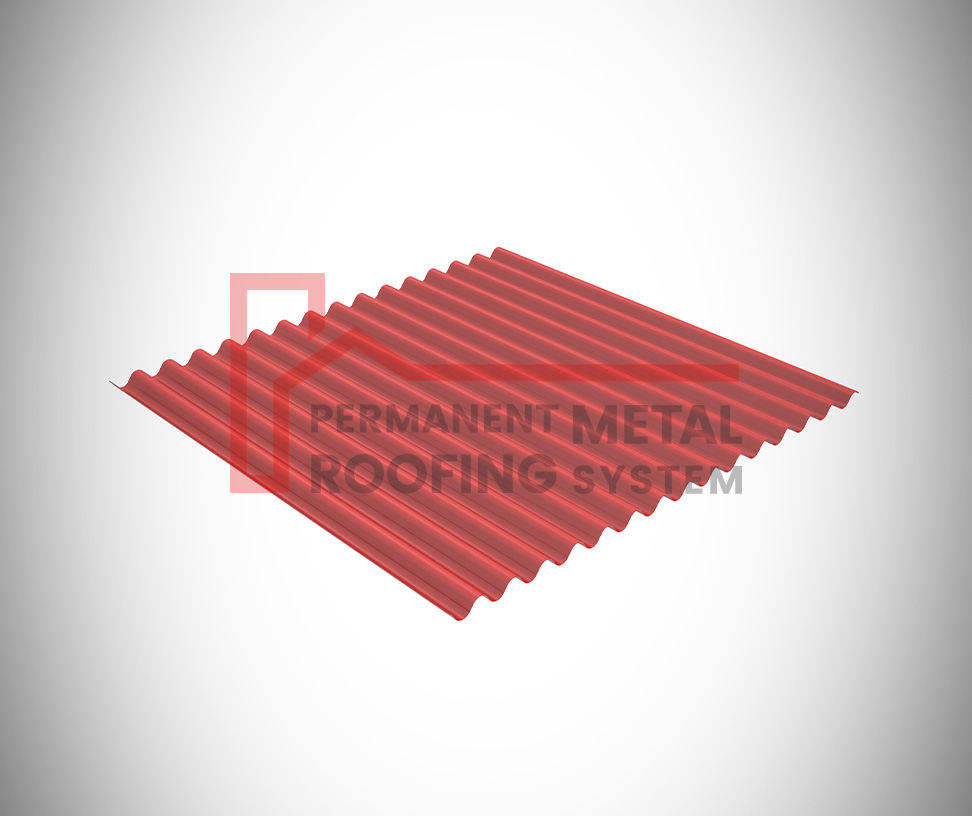
The trade is coverage. Each sheet covers several inches less than the 2.67 x .5 corrugated panel, so a wall takes more steel. Most commercial owners accept that for the flatter face and deeper shadows.
Against the 7.2 rib panel, the 7/8 wave reads softer and more architectural. The 7.2 rib carries more load per sheet and suits plain industrial buildings.
Where Does a 7/8 Corrugated Siding Panel Fit in DFW?
It works best where a wall needs texture and toughness at the same time. These are the projects where we specify it most.
- Retail, restaurant and office facades going for an industrial-modern look.
- Accent walls, entry canopies and covered walkways on new commercial builds.
- Barndominium and modern farmhouse walls where the half-inch wave looks busy.
- Shop and pavilion roofs that need wider purlin spacing than half-inch corrugated allows.
- Screen walls around rooftop equipment and dumpster enclosures.
Sun exposure is the DFW wrinkle. South and west walls take the hardest UV, and darker colors fade fastest there. A PVDF finish holds color far longer than SMP, as our PVDF coatings page explains, and our color chart shows the options.
Installation Notes for a Deep Corrugated Wall
Straight framing is the secret to a good-looking corrugated wall. The deeper wave exaggerates any bow in the girts, so we check the sub-framing with a string line before the first sheet goes up.
- The first sheet is set plumb, not parallel to an out-of-square corner.
- Corner, base and head trim come from our shop, shaped to cover the cut wave.
- Closures must match the 7/8 profile, because half-inch closures leave gaps.
- Screws go on the manufacturer’s pattern, snug without crushing the washer.
- Roof runs get butyl tape at every end lap and laps facing away from the wind.
Walls see less fastener stress than roofs because water does not sit on them. Sun-facing walls and any roof runs still deserve a yearly look, since rubber washers age fastest under direct Texas UV. Typical first fastener work comes after about 10 to 15 years.
For a primary home, weigh this panel against standing seam, which has no exposed screws at all.
7/8 Corrugated Panel Questions
What is the difference between 7/8 and 1/2 inch corrugated?
Both share a 2.67-inch pitch. The 7/8 version has a deeper wave, which makes it stiffer and lets it span wider framing, but each sheet covers a few inches less. The half-inch panel is lighter, wider and more traditional looking.
Is 7/8 corrugated good for roofing or only siding?
Both. It is specified most often as a corrugated siding panel, but its stiffness makes it a capable roof on shops, pavilions and commercial buildings at typical slopes of 3/12 and steeper. End laps on roofs get sealant tape and land over a purlin.
What does 2.67 x 7/8 corrugated mean?
The 2.67 is the distance in inches between corrugation crests. The 7/8 is the depth of each wave from crest to valley, also written as .875 inch. Together they define the profile, so closures and trim must match both numbers.
Can you match an existing 7/8 corrugated building?
Usually. Send photos with a tape measure laid across several waves, or bring a sample. We confirm the pitch, depth and color, then supply a matching panel with trim bent to fit the existing details.
Free Estimate
Share the wall or roof dimensions and drawings if you have them, and we will price panels, trim and labor.
Get Your Free Metal Roof Estimate
Tell us about your roof and a Permanent Metal Roofing Systems specialist will follow up to schedule your free estimate. No pressure, no obligation.
Prefer to talk now? Call (469) 466-2421.
Planning a 7/8 Corrugated Facade or Roof?
We will check spans, confirm the profile and color, and send a written quote with every trim piece listed.