Clips, Fasteners, Underlayment, Sealants and Pipe Boots
Metal Roofing Accessories That Hold a DFW Roof Together
Panels get the attention, but the parts under and around them decide how long a metal roof lasts. These are the metal roofing accessories Permanent Metal Roofing Systems specifies on Dallas-Fort Worth roofs, what each one does, and how contractors can get spec sheets and materials pricing.
- 20+ years of experience
- Lifetime limited warranty
- Free written estimates
What Accessories Does a Metal Roof Need?
Every standing seam roof depends on five accessory families: clips, fasteners, underlayment, sealants and pipe boots. Each one does a job the panels cannot do alone.
- Clips hold panels to the deck and manage thermal movement.
- Pancake-head fasteners attach clips and cleats without telegraphing through the metal.
- Underlayment is the second waterproof layer, and it has to survive Texas roof temperatures.
- Sealants and butyl tape back up the laps at closures, trim and penetrations.
- Pipe boots seal plumbing vents and other round penetrations.
Homeowners get all of these as part of a PMRS roof, so there is nothing to buy separately. Contractors, builders and architects can request materials pricing, spec sheets and submittals for their own projects.
How Do the Accessory Families Compare?
The table shows where each accessory goes and which versions PMRS supplies.
| Accessory | What it does | Where it goes | Options |
|---|---|---|---|
| Clips | Hold panels down; allow or stop movement | Under the panel seams, on the deck | Fixed or floating; galvanized or stainless |
| Fasteners | Attach clips, cleats and trim | Through clip bases and cleats into the deck | Galvanized, yellow-zinc and stainless pancake heads |
| Underlayment | Second water barrier under the panels | Over the whole deck | High-temp self-adhered, synthetic, heavy-duty |
| Sealants and tape | Seal laps, closures and trim joints | Hidden in laps and under closures | Tripolymer sealant, butyl tape, color-matched sealant |
| Pipe boots | Seal round pipes through the roof | At plumbing vents and flues | Sizes and colors; EPDM or silicone; retrofit split boots |
Standing Seam Clips: Fixed or Floating?
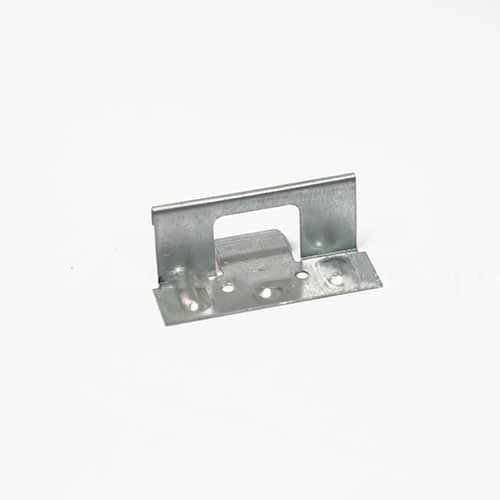
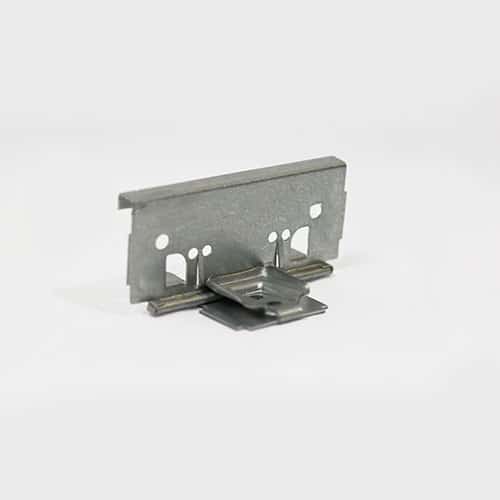
Clips are the concealed brackets that hold standing seam panels to the deck. A fixed clip pins the panel in place. A floating clip holds it down while letting it slide as it heats and cools.
Every metal panel moves. Steel changes length by about 0.0000065 inch per inch for each degree Fahrenheit, and aluminum by roughly twice that. On a 40-foot steel panel, a 150-degree swing from a winter night to a summer afternoon adds up to nearly half an inch. Pin that panel tight along its length and the movement has to go somewhere. It shows up as oil canning, elongated fastener holes or clips that tear loose.
Floating clips solve this with two parts. The base is fastened to the deck, and a sliding tab hooks the panel seam. The panel is locked in one fixed zone, usually near the eave or the ridge, and floats everywhere else. Our 2-inch mechanical lock spec sheet, for example, calls for a heavy-duty interlock clip that secures the panel while allowing expansion and contraction.
When Are Fixed Clips Enough?
Fixed clips work on short panels, where total movement is small, and in the fixed zone of a longer panel. Past a length the panel maker sets, floating clips become the rule. Long runs are where they earn their keep, and PMRS has installed roof panels as long as 100 feet on a past mechanical lock project.
Galvanized or Stainless Steel Clips?
Galvanized clips are the standard partner for Galvalume steel panels. Stainless steel clips go under copper and zinc, and they are often used under aluminum, because they avoid galvanic corrosion between unlike metals.
Clip spacing is engineered, not guessed. Tighter spacing raises wind-uplift resistance at edges and corners, and site-specific engineering is available on request. Profile details are on our standing seam, snap lock and mechanical lock pages.
Pancake-Head Fasteners: PAN GAL MTM, PAN YELL WTW and PAN HD SS MTM
Pancake-head screws attach clips, cleats and trim to the structure. Their wide, very low head sits flat under the panel, so nothing telegraphs through the metal as a bump or a shiny dimple.
Hex-washer heads suit exposed-fastener panels, where the screw goes through the panel face. Under a standing seam panel, a tall head would press into the metal from below.
| Fastener | Finish or metal | Typical use |
|---|---|---|
| PMRS PAN GAL MTM | Galvanized pancake head | Metal-to-metal attachment, such as clips and cleats on steel decking or framing |
| PMRS PAN YELL WTW | Yellow-zinc pancake head | Attachment into wood decking |
| PMRS PAN HD SS MTM | Heavy-duty stainless pancake head | Metal-to-metal attachment where corrosion resistance matters, such as copper, zinc and aluminum roofs |
Length, diameter and point type depend on the deck, clip and uplift design, so we do not publish one size for every roof. Contractors can request the fastener spec sheet with a materials quote.
Which Underlayment Goes Under a Metal Roof in Texas?
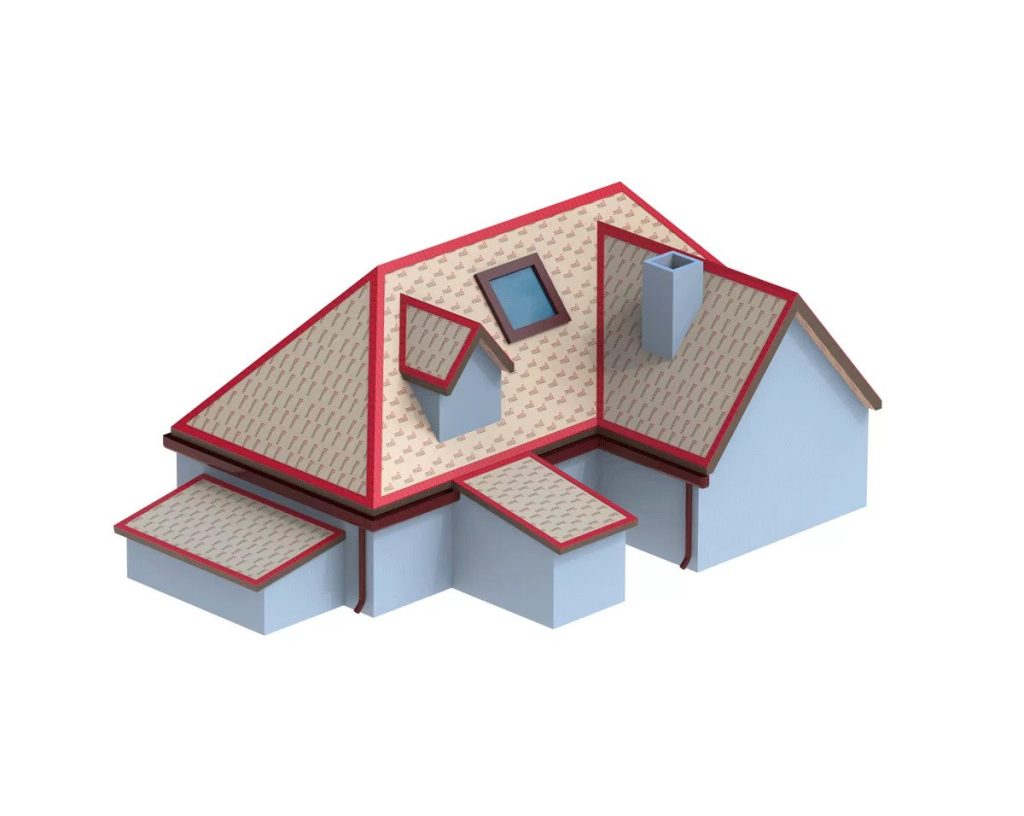
Under a metal roof in DFW, underlayment has to survive heat as well as water. We specify a high-temperature self-adhered membrane where water concentrates or slopes are low, and a synthetic or heavy-duty sheet across the open field where the system allows it.
Metal panels get much hotter than the air on a sunny day, and the underlayment sits right under them. Industry guidance notes that standard synthetics and SBS peel-and-stick membranes often top out around 180 to 240 degrees. High-temperature products are commonly rated from about 240 to 265 degrees.
A membrane that is not rated for the heat can soften, ooze and stick to the underside of the panels. Once it bonds to the metal, it fights the panel’s thermal movement. That is why our mechanical lock spec sheets call for Pro HT high-temperature underlayment at 3/12 slope and below.
PMRS HD PRO HT
Our high-temperature, self-adhered underlayment. It bonds to the deck and seals around fasteners, so it goes in valleys, at eaves and rakes, around penetrations and over entire low-slope roofs.
PMRS Synthetic
A synthetic sheet for the open field of steeper roofs, lighter and more tear-resistant than felt. Ask for its data sheet to confirm the temperature rating for your profile.
PMRS UPL HD Blue
A heavy-duty underlayment in the PMRS line for projects that need extra durability under the panels. Full specifications are available on request before you specify it.
Documents on file: the LASTOBOND PRO HT-N high-temperature underlayment product sheet (PDF), the LASTOBOND PRO HT-N instruction manual (PDF) and the Resisto waterproofing safety data sheet (PDF). More documents are on our downloads page.
Sealants and Butyl Tape: Geocel 2300, Butyl Tape and Adfast
Sealants back up the mechanical laps on a metal roof; they never replace them. We use three products, each for a different kind of joint.
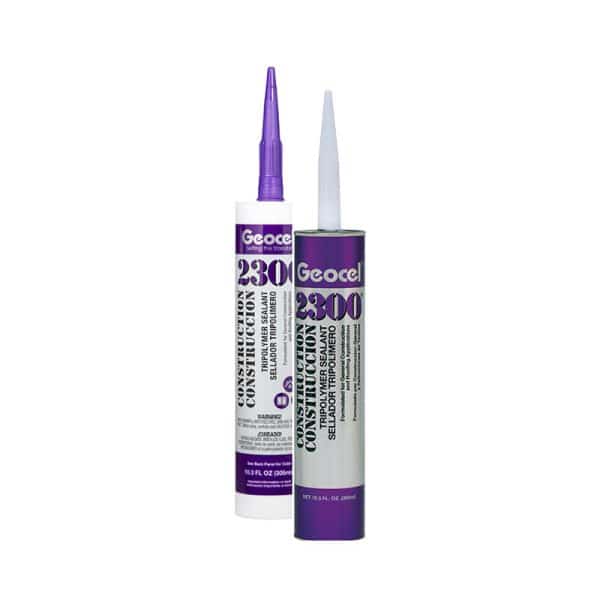
Geocel 2300 Tripolymer Sealant
Geocel describes 2300 as a single-component, high-performance elastomeric sealant for roofing, trim and architectural metal. It grips damp or oily surfaces, stays flexible, resists UV and can be painted without cracking.
It adheres to Kynar 500 coated steel, asphalt shingle, vinyl, steel and concrete. The clear, resealable cartridge shows how much is left, in 10.3 and 29 fluid ounce sizes.
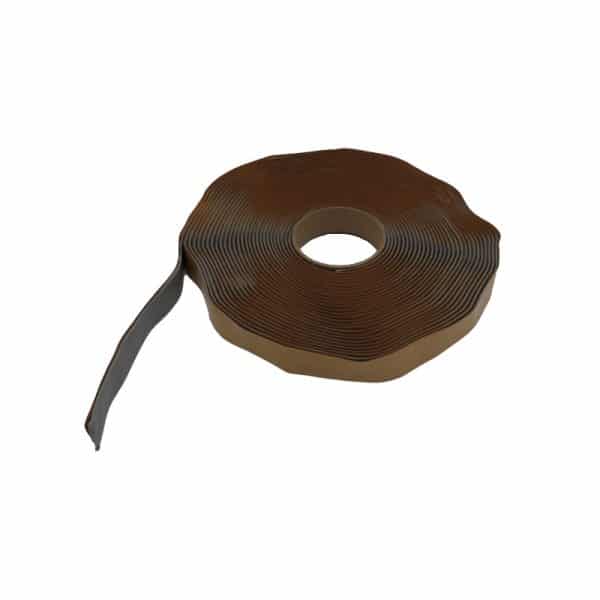
Butyl Tape, 1 x .125 Inch
Our butyl tape is Tacky Tape SM5227, a highly elastic tape made for panel joints and standing seam endlaps. Its tack lets it grip metal with light roll-forming oil, with no pre-wipe needed.
Its maker rates it for service from -40 to 200 degrees and application from -5 to 120 degrees, with over 1000 percent elongation (ASTM C908). It meets AAMA 804-92 and 807-92, plus ASTM E1680 for air and E1646 for water.
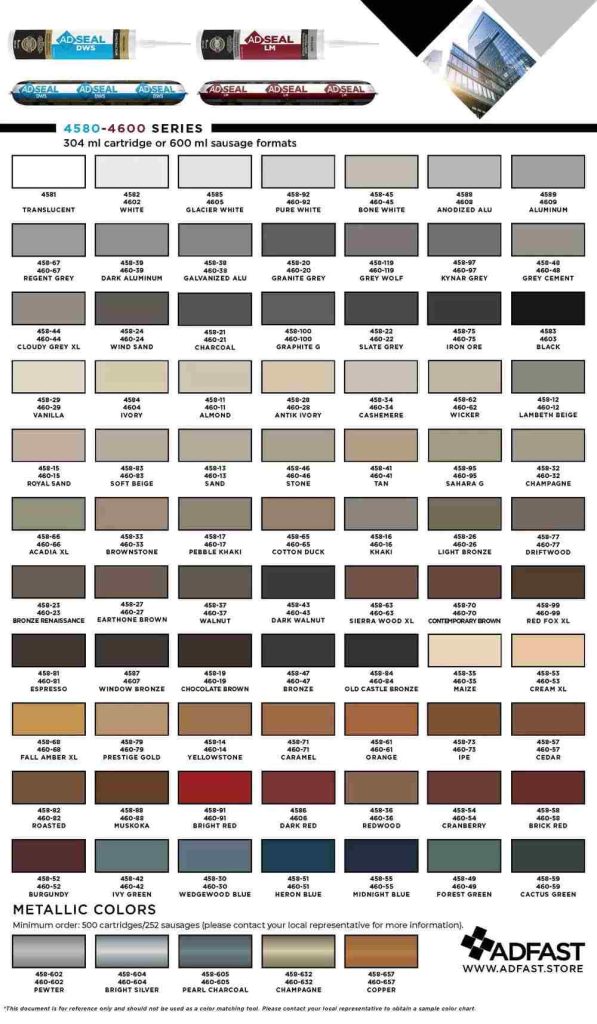
Adfast Color-Matched Sealant
Where a sealant bead stays visible, such as at trim laps or around a penetration, color matters. Adfast offers sealant in a wide chart of colors, so the bead blends with the panel instead of showing as a gray line.
We pick the closest shade to your roof finish.
Pipe Boots for Metal Roofs: Colors, Sizes and Retrofit
A pipe boot is a flexible flashing that seals a round pipe where it passes through the roof. Its soft base bends to the panel shape, and color options let it blend with the roof.
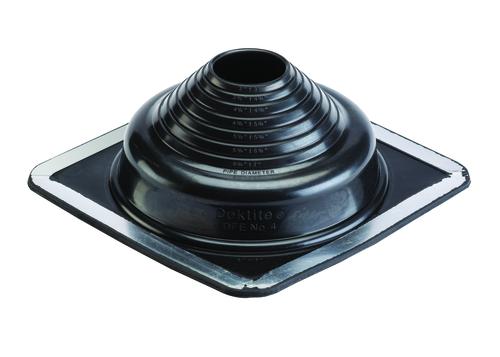
Each boot has diameter rings marked on its cone. The installer trims at the ring that gives a snug fit, so the boot stretches tight around the pipe. The square base has aluminum in it, so it conforms to the panel ribs and pitch before it is sealed and fastened.
Size up, not down. The smallest boot that fits leaves no flex to follow the roof’s movement. For the common 2- to 4-inch pipes, a No. 4 boot is the usual pick for a 4-inch pipe.
Which Boot Material for Which Pipe?
EPDM rubber boots suit ordinary plumbing vents. Hot pipes, such as furnace flues and wood-stove pipes, need silicone, because EPDM can break down early at high temperatures. Both resist cracking, UV and weathering. PMRS has listed a 20-year warranty on the boots it supplies; confirm the current terms with your quote.
Retrofit Boots and Colors
Retrofit boots split open and close around a pipe with a zipper-style seam, so an existing vent does not have to be cut or disconnected. Colored boots let a vent blend into the roof instead of standing out as a black ring.
Where Do Pipe Boots Belong?
- Plumbing vents, bath and kitchen exhausts, and conduit through the roof.
- Set the boot in the flat of a panel, never across a standing seam.
- If a pipe lands on a seam, we move the pipe or build a custom flashing.
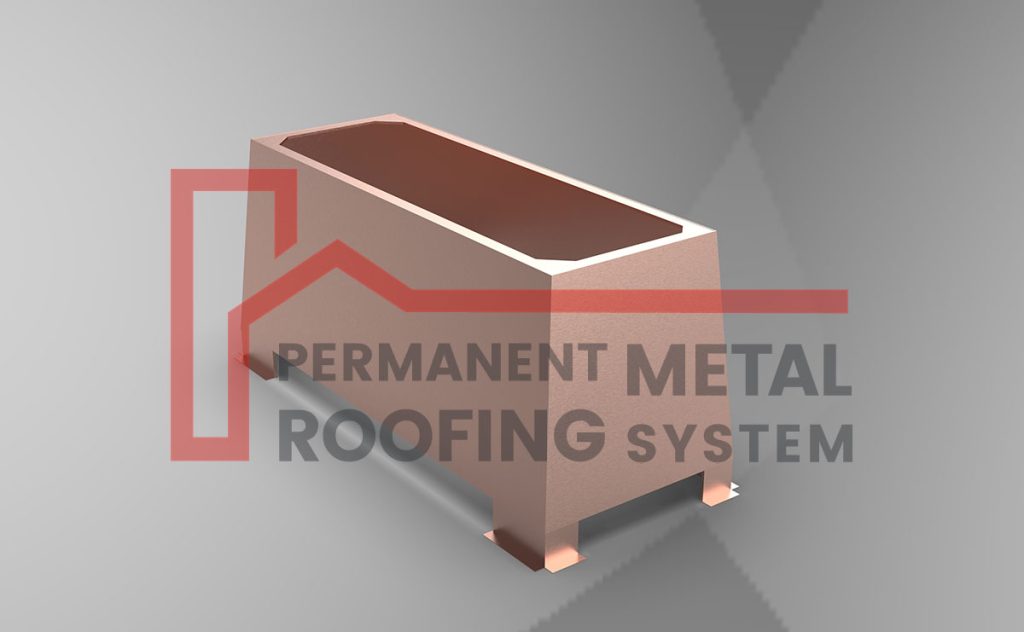
- Chimneys, curbs and skylights need custom flashing and a cricket instead.
On a PMRS roof, pipe boots are priced at $200 per penetration. See custom metal flashing for larger penetrations and custom chimney caps for chimneys.
Why Do Accessories Matter More on DFW Roofs?
North Texas tests every hidden part of a roof each year. Heat, freezes, hail and wind each hit a different accessory.
- Heat. DFW typically sees about 20 days a year at or above 100 degrees, and 2023 had 55. Underlayment and butyl ratings matter.
- Freezes. In January 2024 the metro stayed below freezing for 89 straight hours. Floating clips let panels shrink without tearing loose.
- Hail. Texas has led the nation in major hail events for 11 straight years, per NICB and Verisk analysis. Check pipe boots and visible sealant after big storms.
- Wind. News reports put gusts near 80 mph across the metro in May 2024. Clip spacing and cleated trim decide whether edges stay down.
Read how impact ratings work on our Class 4 metal roofing page.
Can Contractors Buy PMRS Accessories?
Yes. Contractors, builders and architects can buy PMRS accessories with or without panels, plus flashing bent to their drawings. Request materials pricing, spec sheets, color charts and submittals through our contact page. Panel and coating documents are on our downloads page, and our services page covers take-offs and shop drawings.
Homeowners never need to shop for any of this, because every accessory comes specified and installed with a PMRS roof. Our team brings 20+ years of combined experience to those choices. Start with a free estimate.
Related Sheet Metal and Trim
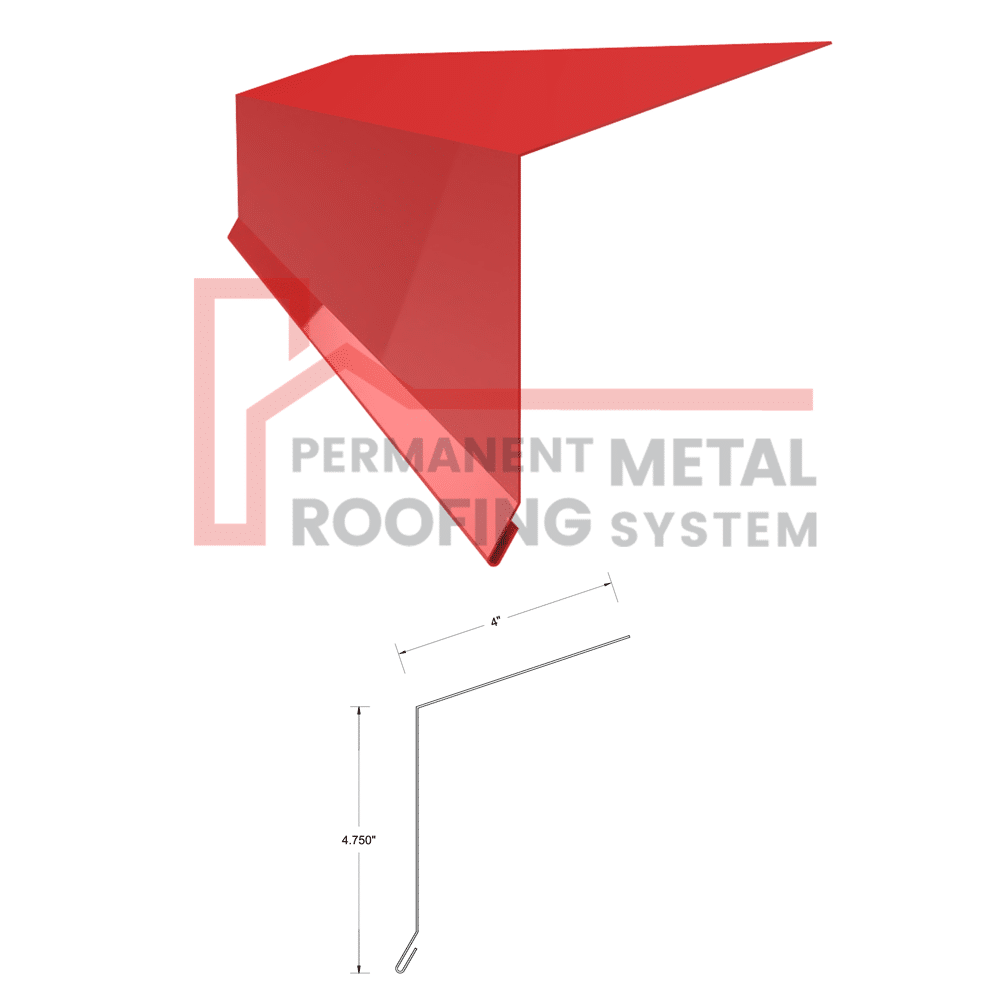
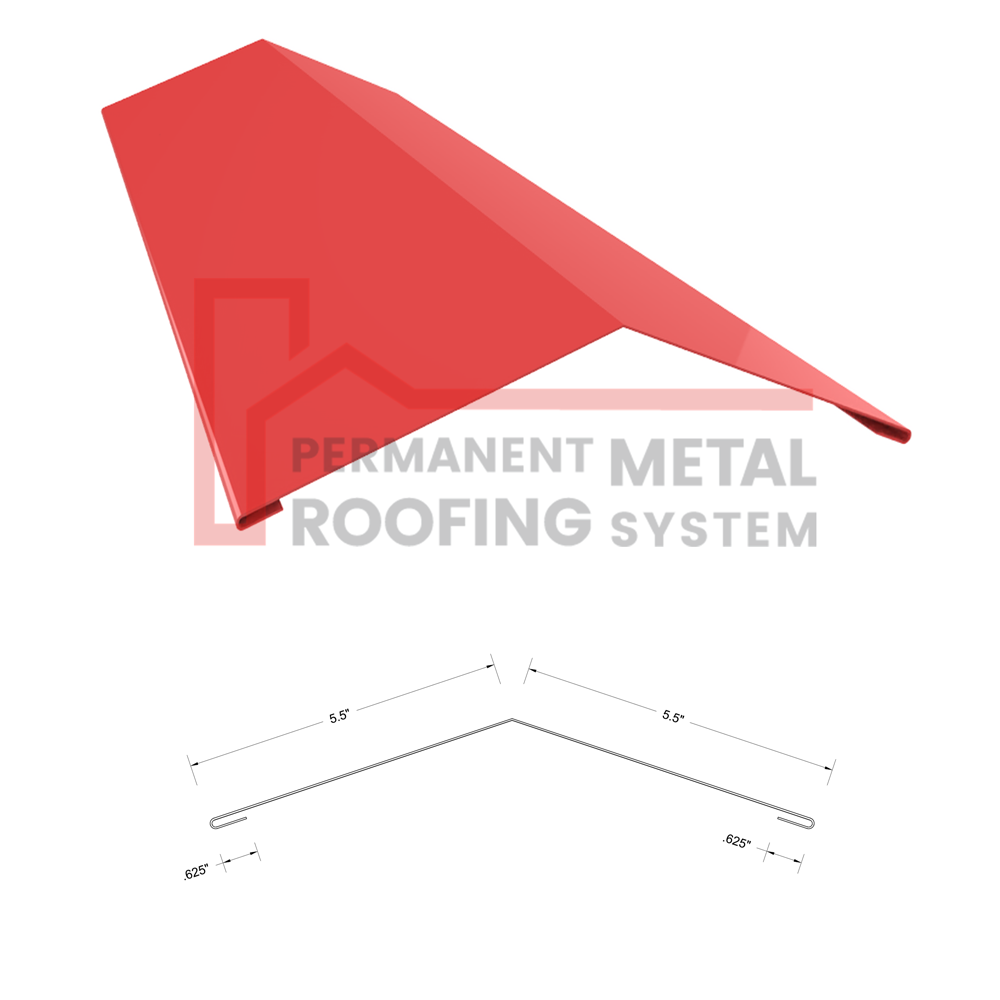
Accessories work alongside the flashing and trim we bend in-house.
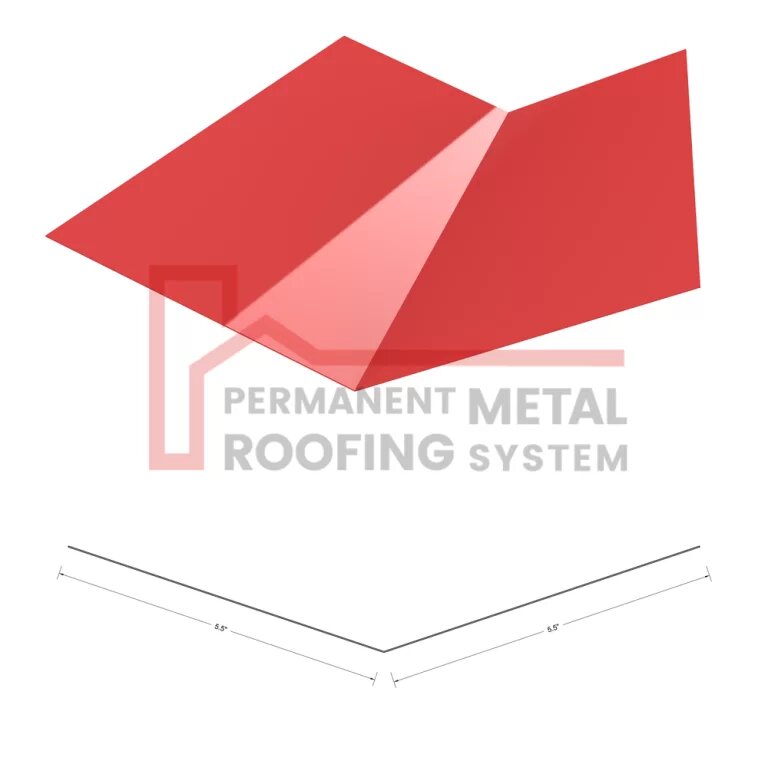
Custom Metal Flashing
Valleys, sidewalls, headwalls and transitions bent to your roof’s measured angles.
Homeowner Reviews
What Dallas-Fort Worth Homeowners Say About Permanent Metal Roofing Systems
Metal Roofing Accessories FAQ
Do I need floating clips on my metal roof?
On long panels, yes. Floating clips let each panel expand and contract while staying locked down, which helps prevent oil canning and torn fasteners. Short panels and the fixed zone of longer panels can use fixed clips.
What are pancake-head fasteners used for?
They attach clips, cleats and trim under standing seam panels. The low, wide head sits flat, so it does not push a bump into the panel above. PMRS supplies galvanized, yellow-zinc and stainless versions.
Why does a metal roof need high-temperature underlayment?
Metal panels get far hotter than the air, and ordinary membranes can soften and stick to the panels. High-temperature products are commonly rated to about 240 to 265 degrees. Our mechanical lock spec sheets call for Pro HT underlayment at 3/12 and below.
Can contractors buy accessories from PMRS?
Yes. We supply clips, fasteners, underlayment, sealants and pipe boots to contractors and builders, with or without panels. Request pricing and spec sheets through our contact page.
What size pipe boot do I need?
Pick a boot whose marked range covers your pipe with room to spare. For common 2- to 4-inch vents, a No. 4 boot is the usual choice for a 4-inch pipe, and hot flues need silicone.
Do accessories affect my roof warranty?
They are part of it. Using matched, specified components is what lets us stand behind PMRS standing seam roofs with our Lifetime Non-Prorated Limited Warranty, which covers material and labor. Read the terms on our warranties page.
Get Your Free Metal Roof Estimate
Tell us about your roof and a Permanent Metal Roofing Systems specialist will follow up to schedule your free estimate. No pressure, no obligation.
Prefer to talk now? Call (469) 466-2421.
Built Right Down to the Last Clip
Homeowners get every accessory specified and installed with a PMRS roof. Contractors get the same parts, with spec sheets and materials pricing on request.