
Standing seam metal roofing
Standing Seam Metal Roofing for Dallas-Fort Worth Homes and Buildings
Standing seam metal roofing in Dallas starts with long panels that run from ridge to eave, joined by raised seams over hidden clips. Permanent Metal Roofing Systems forms those panels on its own roll formers, bends the trim on computerized equipment and installs the whole system from our Mesquite office.
- 20+ years of experience
- Lifetime limited warranty
- Free written estimates
What is a standing seam metal roof?
A standing seam roof is a concealed-fastener metal roof. Each panel has a raised leg along both edges. Neighboring legs lock into a seam that stands above the flat of the roof, so water runs down the pans and never crosses a screw.
The fasteners stay hidden. Clips screw to the deck and hook over one panel leg, then the next panel covers them. Floating clips let each panel slide slightly as it heats and cools. That movement matters in a region that typically logs about 20 days at or above 100 F a year.
This design is why standing seam outlasts most roofs on a Texas house. Professionally installed metal roofs commonly last 40 to 70 years here. Asphalt shingles in DFW heat and hail often need replacing in 15 to 20.
Which standing seam system is right for your roof?
Pitch decides first, then looks and budget. PMRS builds two standing seam families and two architectural panels, and each one solves a different problem.
- Snap lock panels press together by hand. They are the faster, more economical choice for roofs pitched at 3/12 or steeper.
- Mechanical lock panels are folded shut with a power seamer. They can run as flat as 1/2:12 and can qualify for a weather-tightness warranty.
- Flat lock and diamond panels are small formed pieces for turrets, bays, mansards and walls.
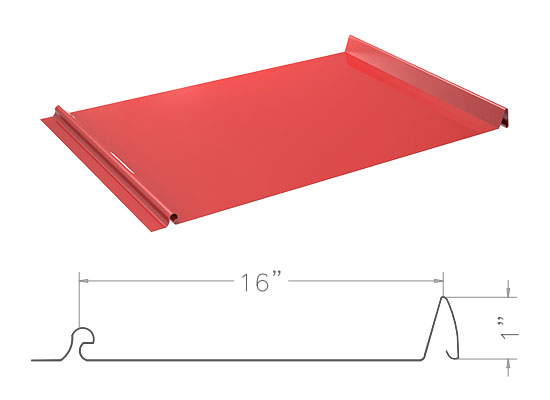
1″ snap lock
The lowest, crispest seam we form. It suits steep residential roofs, dormers and small accent areas.
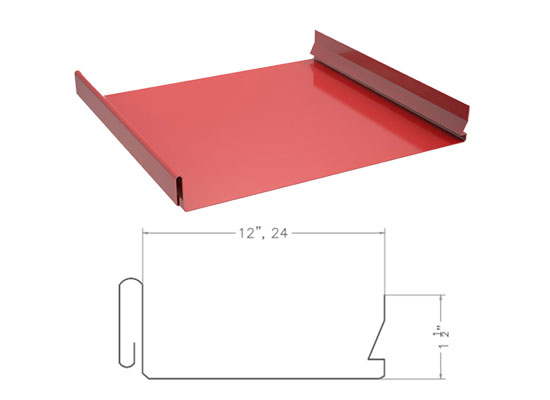
1.5″ snap lock
An architectural panel, 12 to 20 inches wide, that carries one clean seam from roof to mansard, fascia, wall or soffit.
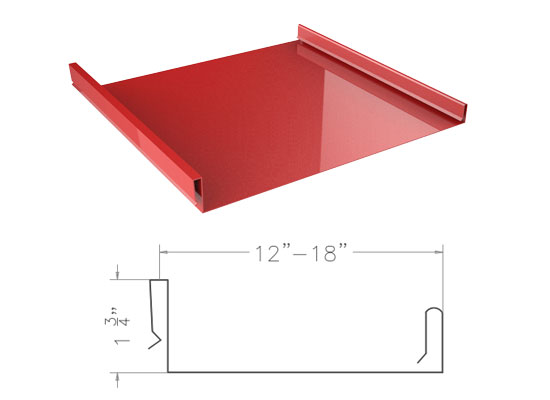
1.75″ snap lock
Our most popular system. A taller structural seam with a factory sealant bead that can also span open framing.
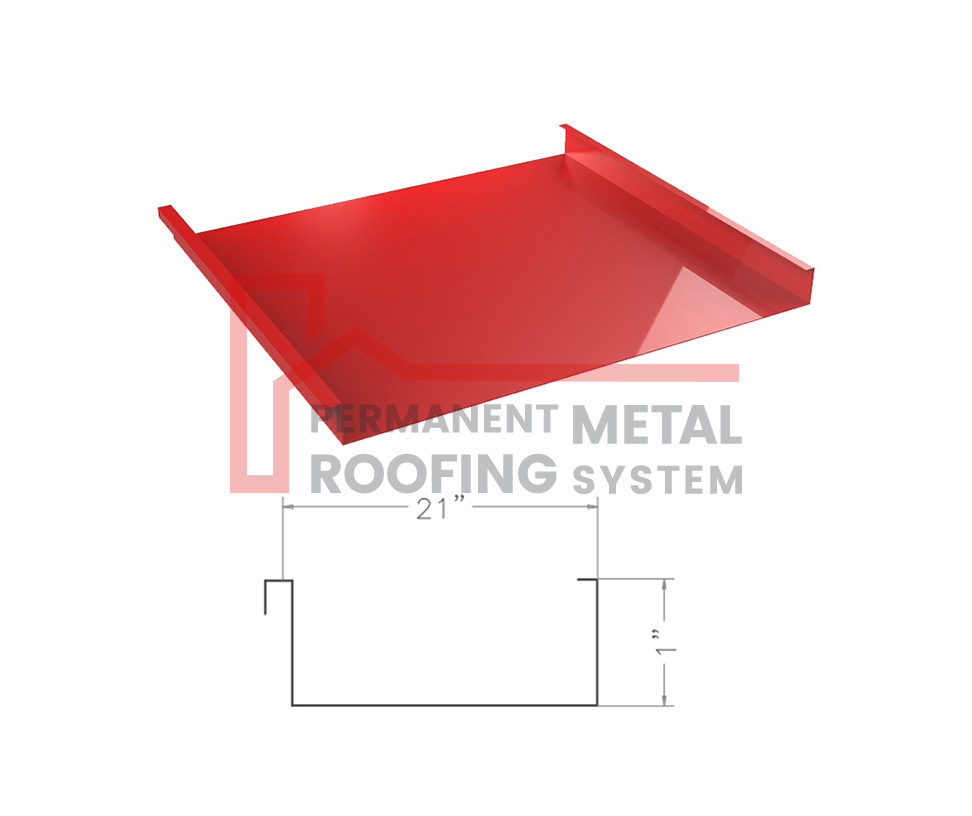
1″ mechanical lock
A slim, light-duty seamed panel for low-slope homes, walls and copper or zinc accents.
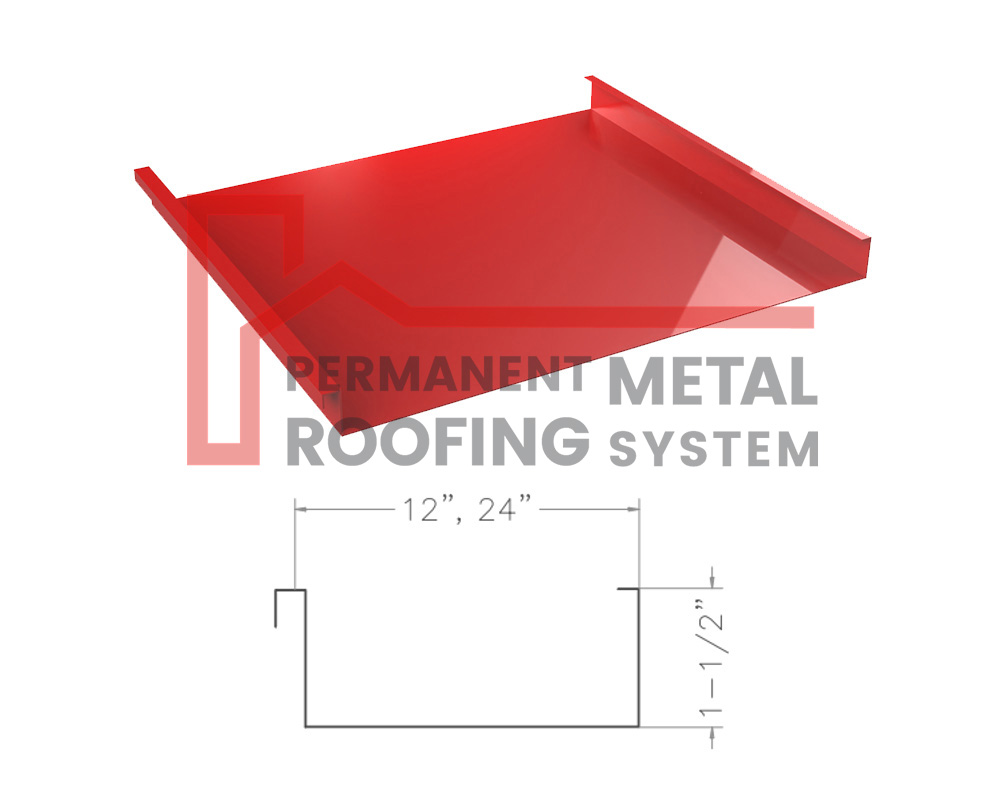
1.5″ mechanical lock
The heavy-duty seamed panel we reach for on low-slope houses, long runs and high wind-uplift requirements.
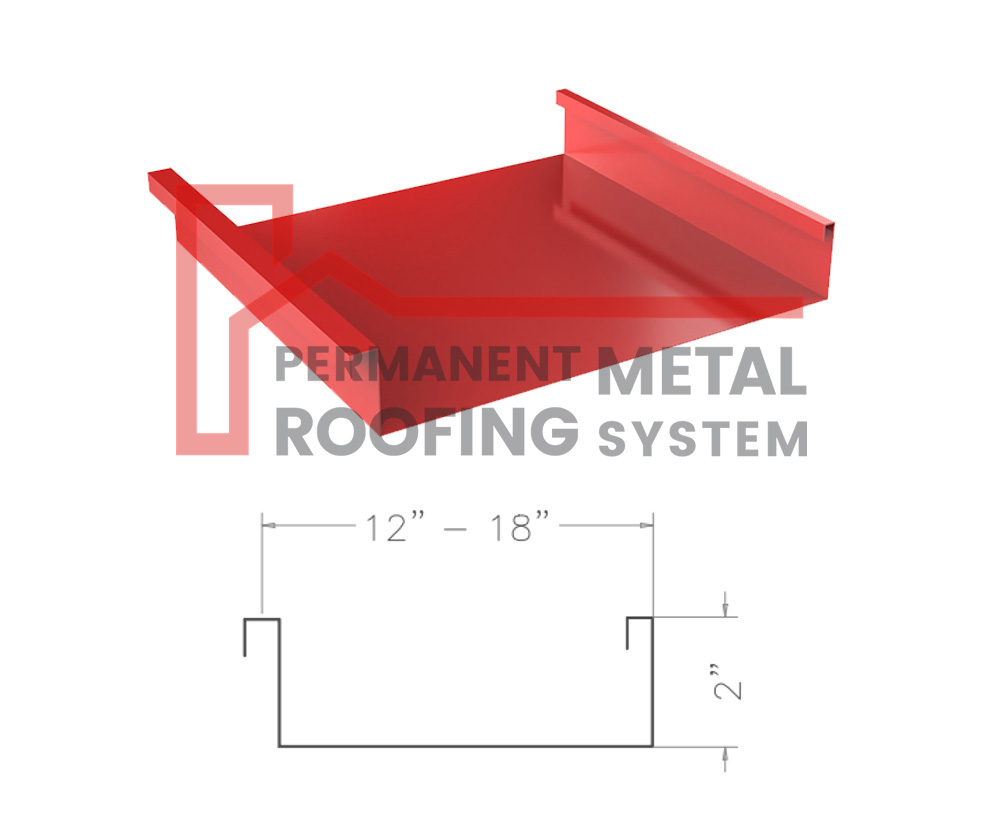
2″ mechanical lock
A structural panel for metal buildings and open framing, seamed at 45, 90 or 180 degrees.
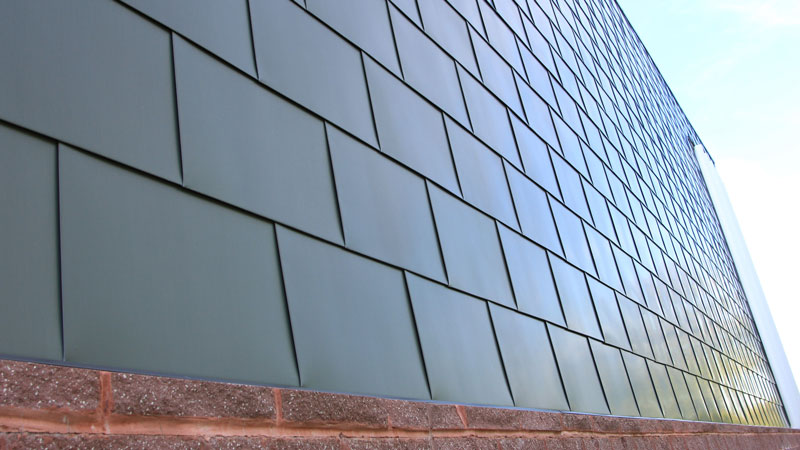
Flat lock panels
Small flat pans that hook together on all four edges, for curved surfaces, walls and fine detailing.
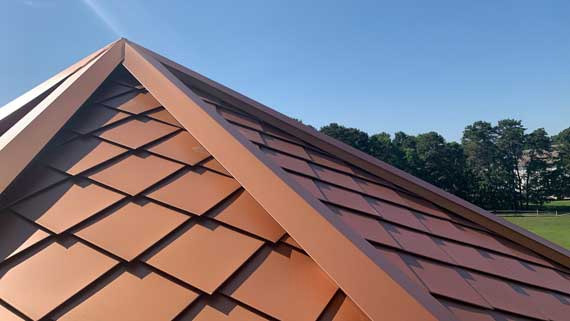
Diamond panels
Square metal shingles turned on point to form a diamond pattern on turrets, dormers and accent walls.
Exposed-fastener panels
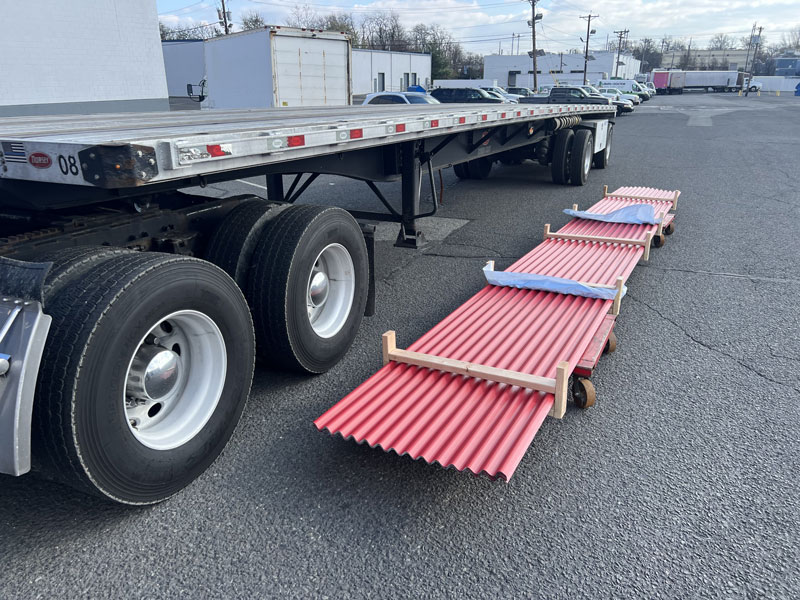
Corrugated, 7.2 rib, PBR and RPBR panels for shops, barns and porches when budget leads. Screws go through the panel face.
How do snap lock, mechanical lock and exposed-fastener panels compare?
Snap lock and mechanical lock are both concealed-fastener standing seam. Exposed-fastener panels are a cheaper class of roof with screws through the face. The table shows where each one fits.
| Feature | Snap lock | Mechanical lock | Exposed fastener |
|---|---|---|---|
| Seam or rib heights | 1″, 1.5″ and 1.75″ seams | 1″, 1.5″ and 2″ seams | Corrugated or trapezoidal ribs |
| How panels join | Seam legs snap together by hand | A power seamer folds the legs 90 or 180 degrees (45 is also offered on the 2″) | Panels overlap and screw through the face |
| Fasteners | Concealed clips | Concealed clips | Exposed screws with rubber washers |
| Minimum slope | 3/12 | 1/2:12 | Varies by profile; see the panel page |
| Deck | Solid deck; the 1.75″ can also span open framing | Solid deck for the 1″ and 1.5″; the 2″ can span open framing | Often purlins or open framing |
| Materials | 26, 24 and 22 gauge steel; .032″ and .040″ aluminum | Steel and aluminum, plus 16 oz copper and Rheinzink zinc (20 oz copper on the 2″) | Typically painted or bare steel |
| Weather-tightness warranty | Not part of the snap lock spec | Available when seamed to spec | Not offered |
| Thermal movement | Floating clips | Floating clips; heavy-duty interlock clip on the 2″ | Screw holes can wear and elongate on long runs |
| Upkeep | Very low | Very low | Screws and washers typically need attention in 10 to 15 years |
| Installed cost | Lowest standing seam cost | Higher, since seaming adds labor | Lowest up front |
| Best for | Pitched homes and light commercial | Low slopes, long runs, high wind, copper and zinc | Shops, barns, barndominiums and porches |
Want the full side-by-side? Read snap lock vs. mechanical lock standing seam before you decide.
What does Dallas-Fort Worth weather ask of a standing seam roof?
Hail, heat and wind set the spec here. Texas has led the country in major hail events for 11 straight years, according to NICB analysis. North Texas summers then bake every roof for months.
Hail and Class 4 ratings
Gauge is the first defense. 24-gauge steel is roughly 28 percent thicker than 26-gauge, which is why it is the usual residential spec in hail country. Large hail can still dent any metal, so plan on cosmetic marks after a severe storm.
Insurance credits depend on testing. Texas carriers give their largest impact-resistant credit to roofs rated UL 2218 Class 4, but each company sets its own discount and paperwork. Our Class 4 metal roofing page explains which assemblies carry that rating.
Heat, UV and finishes
A dark roof in July runs far hotter than the air around it. We specify high-temperature underlayment rated for that heat. We also finish panels in PVDF (Kynar 500), which resists fading and chalking better than SMP under a UV index that often reaches 9 or 10.
HOAs and low-slope porches
Texas Property Code 202.011 limits how an HOA can block wind- and hail-resistant or energy-efficient roofing that fits the neighborhood’s look. The statute is written around shingles, so we back standing seam requests with spec sheets, color samples and drawings for the architectural committee.
Many DFW homes also have porches and additions too flat for shingles. A mechanical lock panel rated to 1/2:12 can cover them in the same color as the main roof.
How much does standing seam cost in DFW?
Our installed baseline is $15 per square foot of roof for 24-gauge Galvalume standing seam in Kynar 500, as of October 2026. At that rate a 2,000-square-foot roof comes to about $30,000 before tear-off and options.
- 26-gauge panels in SMP: $14 per square foot installed.
- Porches, patios and additions: $25 per square foot installed.
- Tear-off: $1.25 per square foot for the first layer.
- Roofs pitched 8/12 and steeper: add $2 per square foot.
Mechanical lock, aluminum, copper and zinc are quoted per project. Run your own numbers in the metal roof cost calculator.
Why buy standing seam from the company that forms it?
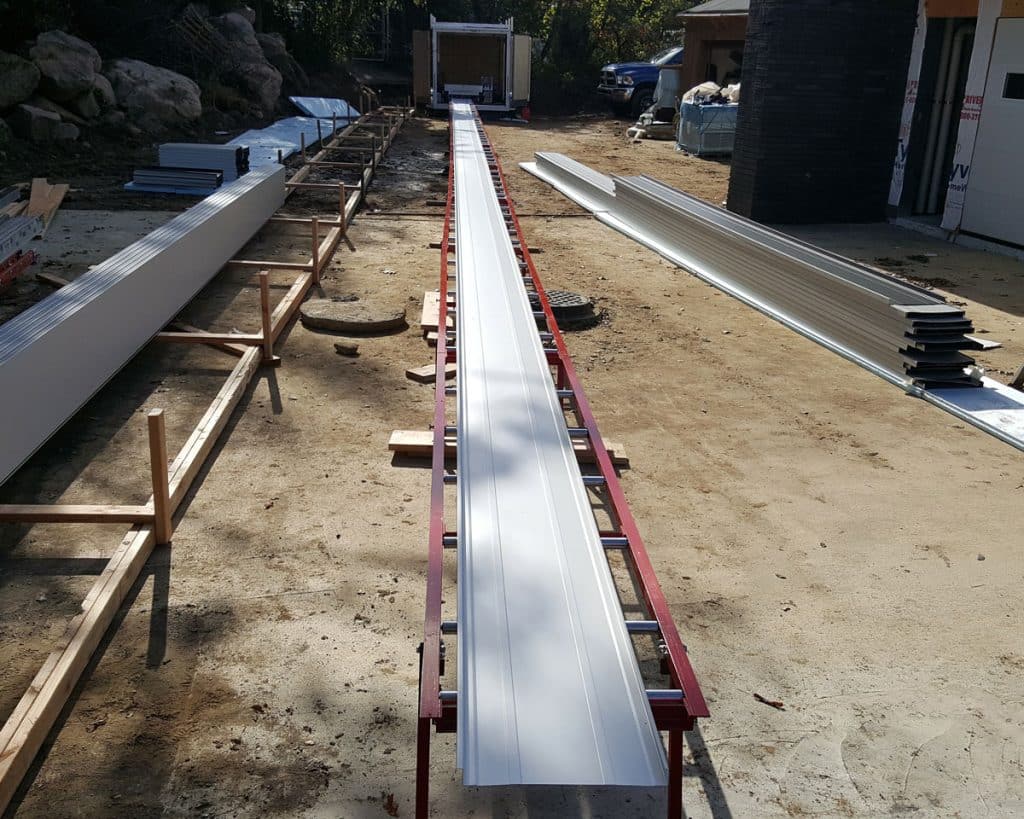
Because one team controls the whole system. PMRS roll-forms panels to the length of each roof run, so most residential slopes go on without end laps. Trim, flashing, coping and custom parts are bent on computerized equipment, so every piece matches the next.
That consistency helps keep metal from crazing, cracking and oil canning. It also keeps cost down, because fabrication stays in-house instead of going out to another shop.
Two jobs from our files show the range. One home took about 10,000 square feet of 1.5″ mechanical lock, including 100-foot roof panels, walls and soffits in .032 aluminum. A retail building got 1.5″ snap lock in a matte black Tedlar finish with custom box gutters.
- Spec sheets for every profile, plus shop drawings and submittals for builders and architects
- Take-offs, estimating and site-specific engineering on request
- Panels, trim and clips sold to contractors as a materials package
- A lifetime non-prorated limited warranty on PMRS standing seam roofs, covering material and labor
Which colors and finishes can you choose?
Homeowners usually choose a PVDF color from our metal roof color chart. Light, cool colors reflect more of the summer sun and help keep the attic cooler.
Finish warranties come from the coil coater and sit apart from our workmanship warranty. They run 30 years on solid PVDF colors, 20 on metallics, 15 on SMP and 25 on acrylic-coated Galvalume Plus. Tedlar PVF film carries finish warranties of up to 50 years.
Copper and Rheinzink zinc need no paint at all. They weather to a natural patina and are formed on the mechanical lock profiles.
Download the PMRS spec sheets
- 1.5″ MD snap lock spec sheet (PDF)
- 1.75″ MD snap lock spec sheet (PDF)
- 1″ LD mechanical lock spec sheet (PDF)
- 1.5″ HD mechanical lock spec sheet (PDF)
- 2″ mechanical lock spec sheet (PDF)
The building photos printed on these sheets are manufacturer images, not PMRS projects.
Homeowner Reviews
What Dallas-Fort Worth Homeowners Say About Permanent Metal Roofing Systems
Standing seam questions from DFW homeowners
Is a standing seam metal roof worth it in Dallas?
For most owners who plan to stay, yes. Metal typically costs two to three times as much as architectural shingles up front. It can last 40 to 70 years in Texas, while shingles here often need replacing in 15 to 20.
What is the difference between snap lock and mechanical lock?
Snap lock seams press together by hand and suit roofs pitched 3/12 or steeper. Mechanical lock seams are folded shut by a power seamer, so they can go down to 1/2:12 and qualify for a weather-tightness warranty when seamed to spec.
How flat can a standing seam roof be?
Our mechanical lock panels are rated to a 1/2:12 minimum slope, with high-temperature underlayment recommended at 3/12 and under. Snap lock panels need at least 3/12. Flatter roofs typically call for a membrane system instead of metal panels.
Will hail dent a standing seam roof?
Large hail can dent any metal roof, especially thinner gauges and soft metals like copper. Heavier 24-gauge steel resists better, and dents are usually cosmetic rather than leaks. Check your policy for a cosmetic-damage exclusion before you buy.
What gauge should I choose for a house in DFW?
We usually recommend 24-gauge Galvalume steel. It is roughly 28 percent thicker than 26-gauge and stands up better to hail and foot traffic. Aluminum in .032″ or .040″ is the option when weight or corrosion is the bigger concern.
Is a metal roof louder in the rain?
Not when it goes over solid decking and underlayment, which is how we install residential standing seam. The deck and attic insulation soak up most of the drumming people remember from open barn roofs.
Will my HOA approve a standing seam roof?
Often, but you still need approval. Texas Property Code 202.011 protects certain impact-resistant and energy-efficient roofing that matches the neighborhood. We supply spec sheets, color samples and drawings for your submittal.
Do you sell standing seam panels to contractors?
Yes. We supply roll-formed panels, trim, clips and accessories, along with take-offs, shop drawings and submittals. Materials-only packages in 24-gauge start at $9 per square foot.
Get Your Free Metal Roof Estimate
Tell us about your roof and a Permanent Metal Roofing Systems specialist will follow up to schedule your free estimate. No pressure, no obligation.
Prefer to talk now? Call (469) 466-2421.
Get a standing seam quote from the people who form the panels
Send us your address or your plans. We will recommend a profile, gauge and finish, then put the price in writing. Builders can ask for take-offs and submittals.