
Stone-Coated Steel | Five DECRA Profiles
Stone-Coated Steel Roofing for Dallas-Fort Worth Homes
Stone-coated steel roofing gives Dallas-Fort Worth homes the look of cedar shake, dimensional shingle or clay tile, with a steel panel doing the work underneath. Permanent Metal Roofing Systems installs all five DECRA stone-coated profiles from our Mesquite office. This page compares them side by side.
- 20+ years of experience
- Lifetime limited warranty
- Free written estimates
What is stone-coated steel roofing?
Stone-coated steel is a pressed steel roof panel finished with real stone granules. Each panel is shaped to copy a traditional roof, such as sawn shake or barrel tile. The panels interlock course by course, so the finished roof reads as one surface.
DECRA, the brand we install, builds its panels as a stack of layers. From the core outward, DECRA lists them as follows:
- A steel core with an aluminum-zinc hot-dip coating that guards the steel against rust
- An acrylic priming system and an acrylic basecoat that bond to the metal
- Ceramic-coated stone granules pressed into the basecoat for color and texture
- A clear acrylic over-glaze that locks the granules in place
The granules are why the roof looks like shake or tile from the street instead of metal. They also hide small surface marks better than a smooth painted panel can.
The steel is also light. DECRA lists four of its profiles at about 150 pounds per 100 square feet installed and Villa Tile at about 160. That is far lighter than clay or concrete tile, which matters when a house was framed for asphalt shingles.
Why does stone-coated steel make sense in Dallas-Fort Worth?
Stone-coated steel answers the three things that drive most DFW roof decisions: hail, heat and the HOA. It carries a Class 4 impact rating, it stands up to heat that ages asphalt early, and it can match a look the neighborhood already approved.
Hail and the Class 4 rating
Texas has led the nation in major hail events for 11 straight years, according to NICB and Verisk analysis. DECRA lists its stone-coated profiles at UL 2218 Class 4, the top class in that test. To earn it, a covering must survive a 2-inch steel ball dropped from 20 feet without cracking.
Many Texas carriers give a premium credit for a Class 4 roof, but each company sets its own amount. The Texas Department of Insurance does not fix a number. Read our guide to Texas impact-resistant roof discounts and our Class 4 metal roofing page before you call your agent.
Class 4 is not a promise of zero damage. Very large hail can still dent steel or knock granules loose. Many Texas policies also carry cosmetic-damage exclusions for marks that do not cause leaks, so read yours.
Texas heat and attic temperature
DFW averages about 20 days a year at or above 100 degrees, and hot summers bring far more. On the batten-mounted profiles, DECRA Shake and DECRA Tile, the battens leave an air space between panel and deck. Moving air in that gap can carry heat away before it reaches the attic.
DECRA also tests its finishes for solar reflectance and offers a cool-color group. If heat is your main concern, ask us for the reflectance data on the colors you like, and see our color chart for every finish we carry.
HOAs and Texas Property Code 202.011
Texas Property Code 202.011 limits how far an HOA can block shingles designed to resist wind and hail. The protection applies when the new roof resembles the shingles used in the subdivision, is more durable, and fits the look of the street.
Stone-coated shake and shingle profiles are built to pass that resemblance test. Your HOA may still require architectural review, so we help assemble samples and product data for the submittal. Our article on HOA approval for metal roofs in Texas explains the process. None of this is legal advice.
Which DECRA stone-coated profile fits your home?
Five profiles cover the main roof looks in a Texas neighborhood. Start with the roofline you want to imitate, then check slope and installation method.
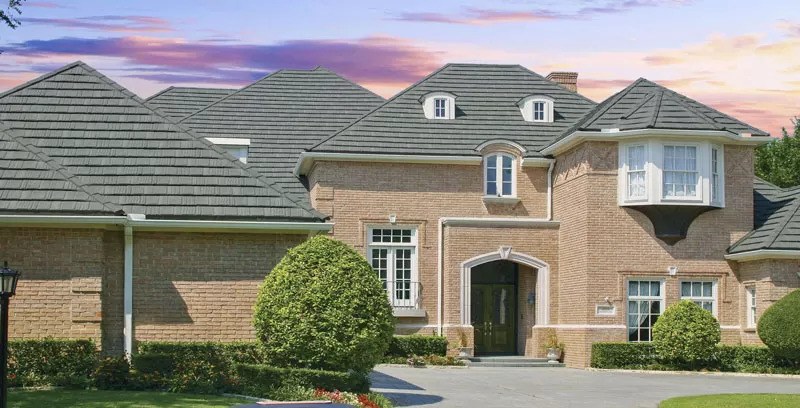
DECRA Shake
A sawn cedar shake look on a batten grid. The battens add a ventilated air space over the deck.
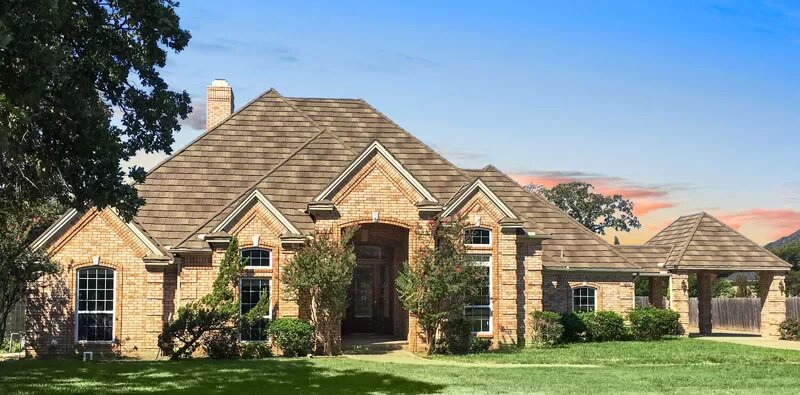
DECRA Shake XD
A heavier hand-split look with thick butt edges. It fastens straight to the deck, with no battens.
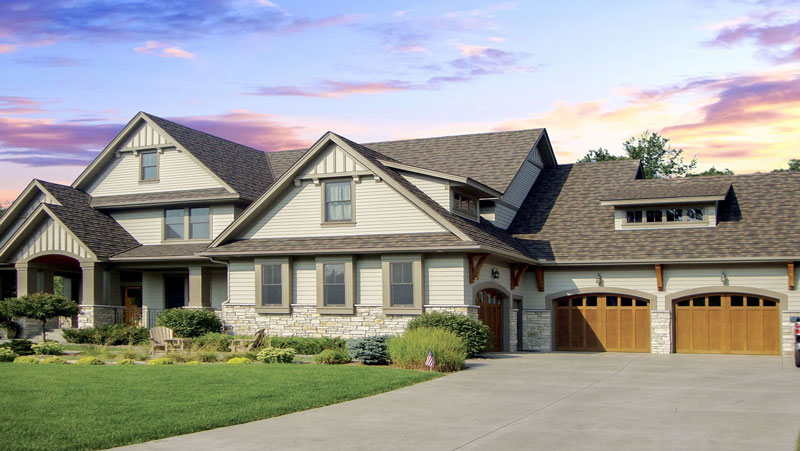
DECRA Shingle XD
Thick-cut edges that mimic a dimensional asphalt shingle. It needs at least a 4:12 pitch.
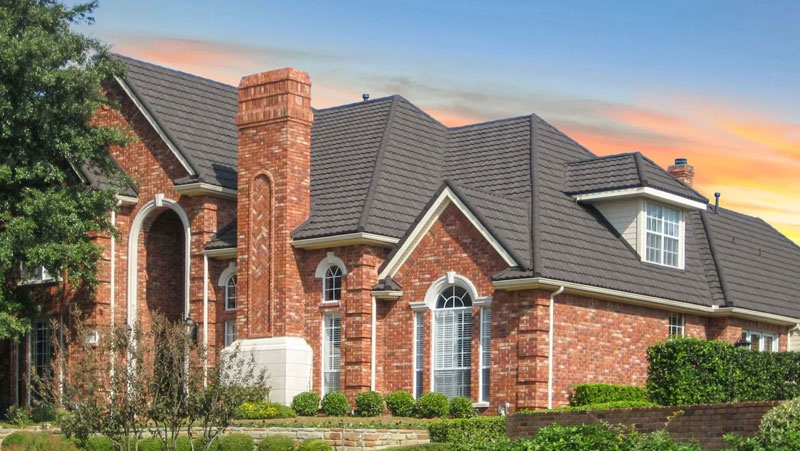
DECRA Tile
A low, rolling Mediterranean tile set on battens. It gives brick homes a tile look without tile weight.
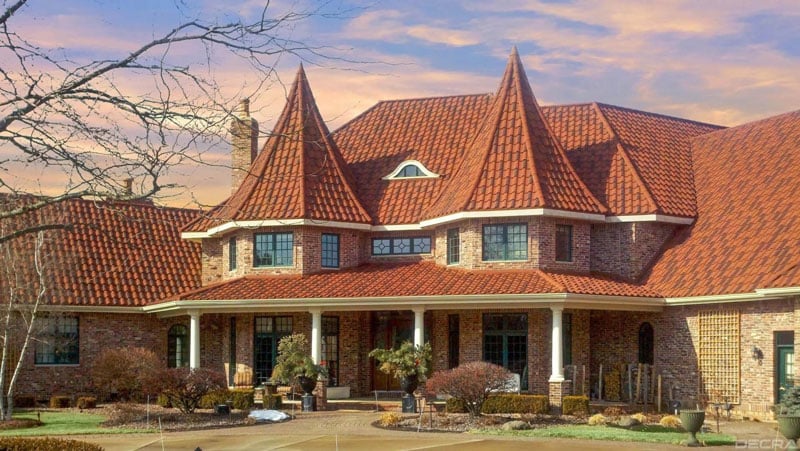
DECRA Villa Tile
A tall barrel profile that copies old-world clay tile. It goes direct to deck on Spanish and Tuscan designs.
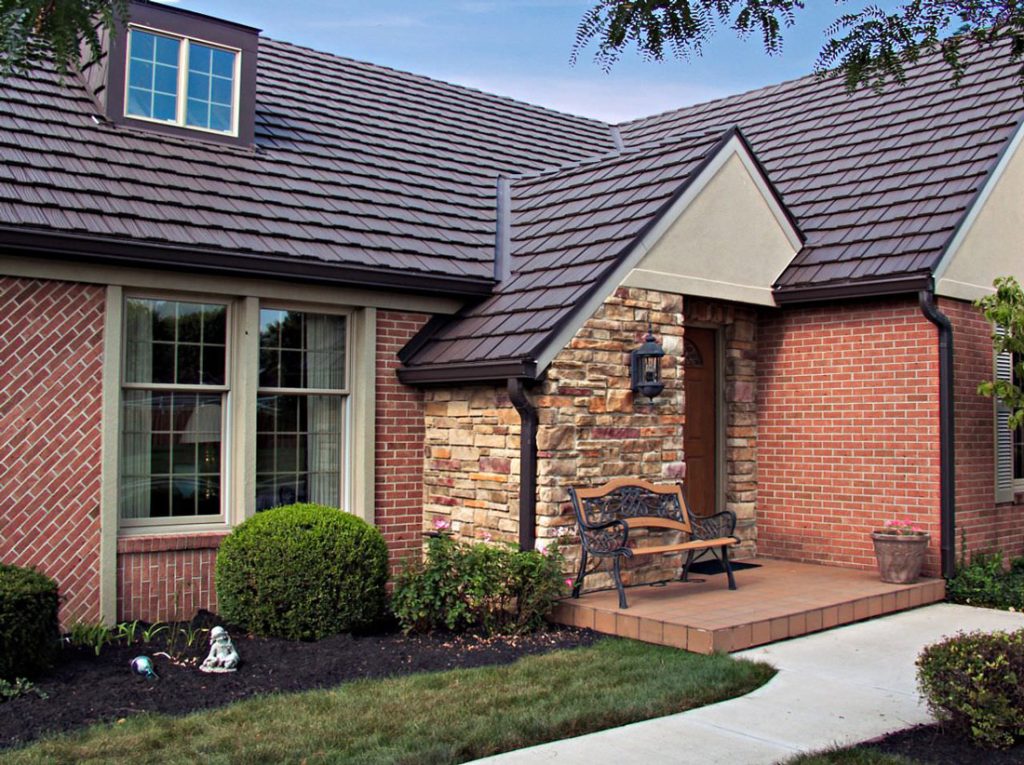
Painted Metal Shingles
Prefer a painted finish or aluminum? Compare the EDCO and Classic Metal Roofing shingles we also install.
How do the five DECRA profiles compare?
The profiles differ in look, in how they attach, and in the slope they need. The figures below come from DECRA’s published specification sheet. We confirm current numbers on every submittal.
| Profile | Look | Attaches | Min. slope | Exposure per panel | Installed weight | Colors we show |
|---|---|---|---|---|---|---|
| DECRA Shake | Sawn cedar shake | On battens | 3:12 | 12-5/8″ x 51″ | About 150 lb per 100 sq ft | 6 |
| DECRA Shake XD | Thick hand-split shake | Direct to deck | 3:12 | 12-3/8″ x 49-7/8″ | About 150 lb per 100 sq ft | 4 |
| DECRA Shingle XD | Dimensional shingle | Direct to deck | 4:12 | 12-1/4″ x 49-1/2″ | About 150 lb per 100 sq ft | 4 |
| DECRA Tile | Low Mediterranean tile | On battens | 3:12 | 14-1/2″ x 50″ | About 150 lb per 100 sq ft | 9 |
| DECRA Villa Tile | Barrel tile | Direct to deck | 3:12 | 14-1/2″ x 39-1/2″ | About 160 lb per 100 sq ft | 8 |
All five share the same DECRA warranty package. It includes a Lifetime Limited Warranty, which DECRA limits to single-family detached homes in the U.S. and Canada. It also includes a 120 mph wind speed warranty and a hail stone penetration warranty.
Those are DECRA’s warranties, and DECRA’s written terms control them. Our warranties page explains how product and installation coverage fit together.
How is stone-coated steel different from standing seam?
Both are steel roofs, but they solve different problems. Standing seam uses long painted panels joined at raised seams over concealed clips. Stone-coated steel uses short interlocking panels whose granule surface imitates another material.
- Look: standing seam reads as clean vertical lines, while stone-coated steel reads as shake, shingle or tile.
- Slope: our mechanical lock standing seam can go down to 1/2:12, while the DECRA profiles need 3:12 or 4:12.
- Who makes it: we roll-form standing seam panels in-house and cut them to each run. DECRA presses the stone-coated panels, and our crews install them.
- Finish: standing seam relies on PVDF paint such as Kynar 500, while stone-coated steel relies on bonded granules under a clear glaze.
- Hail marks: granules disguise small dimples, while thicker 24-gauge standing seam relies on panel stiffness to resist them.
- Solar: standing seam takes clamp-on racking with no roof penetrations, while stone-coated arrays usually need flashed mounts.
Our full stone-coated steel vs standing seam comparison walks through cost, lifespan and resale. If a clean, modern roofline appeals to you, start with our standing seam metal roofing page.
What does a stone-coated steel roof cost in DFW?
We quote stone-coated steel per project rather than from a per-foot price list. Profile, color availability, trim count and deck condition move the number more than they do on standing seam.
For a reference point, our published rate for 24-gauge Kynar 500 standing seam installed on a house is $15 per square foot of roof. A stone-coated quote starts from a measured roof and DECRA’s current material pricing. Every line item then appears in your written estimate.
- Profile: Villa Tile uses about 25 panels per square against 20 for DECRA Tile, and barrel trim adds labor.
- Battens: Shake and Tile need a batten grid, which adds lumber and a labor step.
- Tear-off and decking: we price deck repairs once we can see the boards.
- Color: made-to-order colors can lengthen lead time.
- Roof shape: hips, valleys, dormers and chimneys all add trim and flashing.
Our metal roof cost guide breaks down tear-off, decking and the other line items in detail.
How does PMRS install a stone-coated steel roof?
We follow DECRA’s installation instructions for each profile and build everything around the panels in our own shop. The sequence changes with the profile, mainly at the batten stage.
- Inspect and document. We photograph the roof, check the deck and confirm the slope meets DECRA’s minimum for the profile.
- Tear off and repair. We replace soft or delaminated sheathing so every fastener bites into sound wood.
- Underlayment. We lay a high-temperature underlayment rated for metal roofs, with self-adhered membrane in valleys, at eaves and around penetrations.
- Battens or deck. Shake and Tile go on battens spaced to the panel exposure. Shake XD, Shingle XD and Villa Tile fasten straight to the deck.
- Flashing and trim. DECRA supplies the stone-coated ridge, hip and rake pieces. We bend valley, sidewall and chimney flashings on our computerized bending equipment where DECRA’s details allow.
- Close-out. We check fastening against DECRA’s schedule, clean the site and hand you product records for your insurer and HOA.
Wind matters as much as hail here. Wind warranties assume the panels were fastened as the manufacturer specifies, so we follow DECRA’s fastening schedule exactly. See our installation process for how a PMRS job runs from estimate to final walkthrough.
Homeowner Reviews
What Dallas-Fort Worth Homeowners Say About Permanent Metal Roofing Systems
Stone-coated steel roofing questions
Is stone-coated steel the same as a metal shingle?
It is one family of metal shingle. Stone-coated steel carries a layer of bonded stone granules over the steel, while painted metal shingles such as the EDCO and Classic Metal Roofing lines show a paint finish. Compare both styles on our metal shingles and shakes page.
How long does a stone-coated steel roof last in Texas?
Metal roofs commonly last 40 to 70 years in Texas with light upkeep, while asphalt often lasts 15 to 20 years in DFW heat and hail. DECRA backs its panels with a Lifetime Limited Warranty for single-family detached homes. Real lifespan still depends on installation, ventilation and storm exposure.
Will a stone-coated steel roof lower my insurance premium?
It may. DECRA rates its profiles UL 2218 Class 4, and many Texas carriers offer a credit for Class 4 roofs. Each insurer sets its own amount; the Texas Department of Insurance does not fix one. Ask your agent before you sign, and we will supply the product paperwork your carrier requests.
Can my HOA reject a stone-coated steel roof?
Texas Property Code 202.011 limits an HOA’s power to block wind- and hail-resistant shingles that resemble the approved shingles in the subdivision and match the street. Architectural review can still apply, so we help prepare a submittal with samples and DECRA’s specifications. This is general information, not legal advice.
Do stone-coated steel roofs lose granules?
A little loose stone after installation is common, since excess granules shed from new panels. Over decades, some granule wear can occur, especially after hail. The clear acrylic over-glaze is there to hold the stone in place, and DECRA’s warranty addresses defects on its own terms.
Can stone-coated steel go over my existing shingles?
Sometimes. A batten profile such as DECRA Tile or DECRA Shake can be considered for a recover where code and DECRA’s instructions allow it. We usually recommend a tear-off so we can inspect and repair the deck. Our guide to metal roofs over shingles covers the trade-offs.
How long does it take to get DECRA panels?
Lead time depends on the profile and the color. Some DECRA colors are made to order, which can extend production. We confirm availability for your color before we set an installation date, so the crew is not left waiting on materials.
Does PMRS make the DECRA panels?
No. DECRA manufactures its stone-coated panels and matching trim, and we install them. We fabricate the hidden flashings in our own shop where DECRA’s details allow. The standing seam panels we sell are the ones we roll-form ourselves.
Get Your Free Metal Roof Estimate
Tell us about your roof and a Permanent Metal Roofing Systems specialist will follow up to schedule your free estimate. No pressure, no obligation.
Prefer to talk now? Call (469) 466-2421.
See DECRA samples before you choose
Pick your color from a real sample in daylight, as DECRA advises, not from a screen. Tell us which profile caught your eye, and we will measure, inspect the deck and write a clear quote.