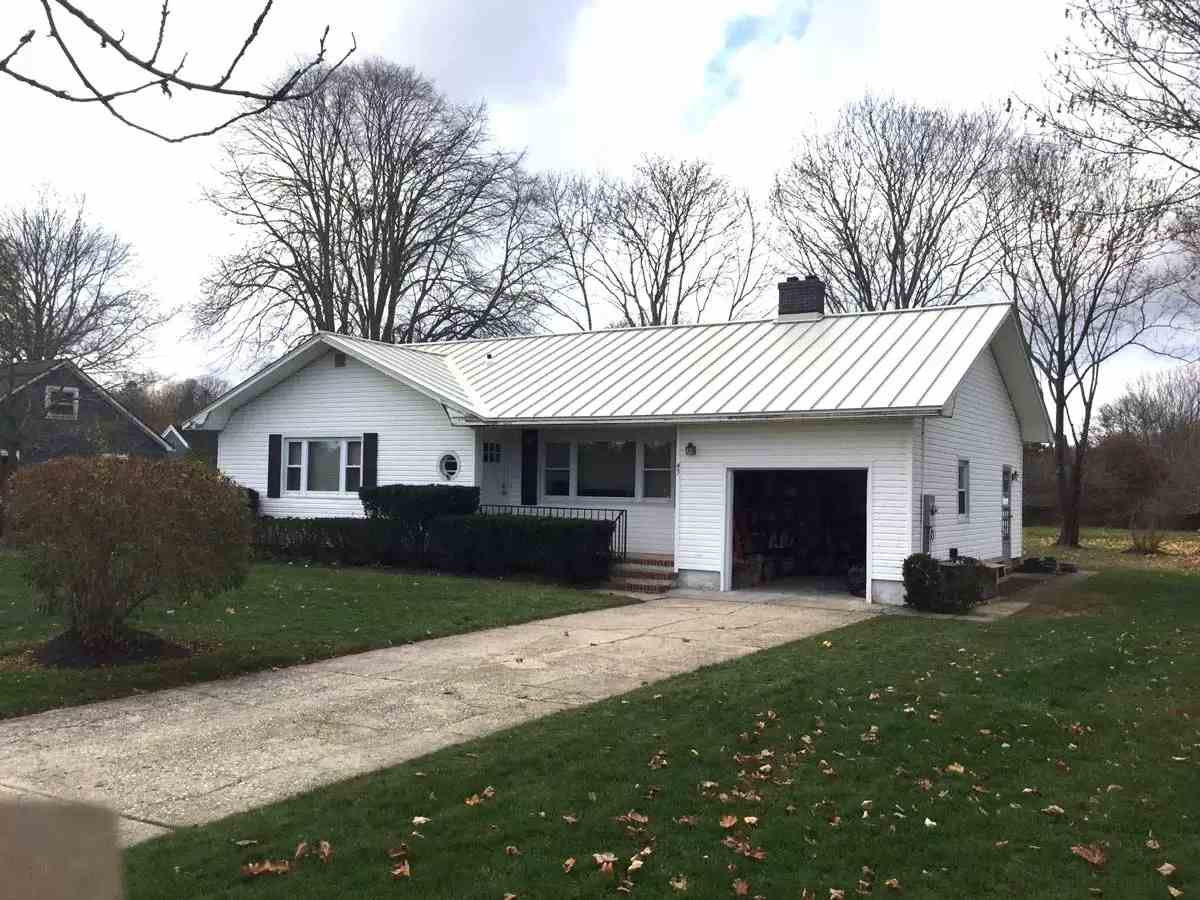
Yes, a metal roof can often go over shingles in Texas, but only over one sound, dry layer and only when the panel maker’s instructions allow it. Those limits come from the 2021 International Residential Code, which Dallas, Fort Worth, Plano and Arlington have adopted with local amendments. Even where an overlay is legal, a tear-off usually builds the better roof.
As the company that forms and installs the panels, we would rather lay out the trade-offs before you sign anything. This guide covers the code, the risks of each path and what a tear-off really costs. Use it to judge any bid you receive, including ours.
What does the code say about a metal roof over shingles?
The code calls an overlay a “roof recover” and puts firm limits on it. Under 2021 IRC Section R908, a full replacement means removing the old roofing down to the deck. A recover is allowed in two cases that matter for metal:
- The new covering goes on according to the manufacturer’s approved instructions.
- The new roof is a complete, separate system, such as standing seam on its own supports, that carries its loads to the structure without leaning on the old roof.
The same section rules out a recover when any of these conditions exists:
- The existing roof is water-soaked or too deteriorated to serve as a base.
- The existing covering is slate, clay, cement or asbestos-cement tile.
- The roof already has two or more layers of any covering.
The code also requires the structure to carry the new roof and the installation loads. Rusted or damaged flashings must be replaced either way. Cities can amend these rules, and a city that moves to the 2024 edition may renumber or adjust them. The permit office has the final word. Dallas requires a re-roof permit for whole-roof work, and Fort Worth requires a permit even when the material stays the same.
Overlay vs tear-off: how do they compare?
A tear-off costs more up front and fixes more problems. An overlay saves the removal step and leaves the old roof, and whatever it hides, in place.
| Question | Overlay on one shingle layer | Tear-off to the deck |
|---|---|---|
| Can the deck be inspected and repaired? | No, it stays hidden | Yes, every sheet is exposed |
| Underlayment | Laid over old shingles | Applied directly to clean sheathing |
| Panel flatness | Shingle edges can show through flat pans | Flat deck, flatter pans |
| Fastening | Through shingles into the deck | Straight into sound wood |
| Wall and chimney flashing | Harder to reach and rebuild | Rebuilt with the new roof |
| Weight on the framing | Old shingles stay on the house | Only the new metal |
| Code limit | One existing layer, dry and sound | No layer limit |
| Up-front cost | Lower | Adds removal, disposal and any deck repair |
Why do we usually recommend a tear-off?
Because the deck decides how long a metal roof lasts. A standing seam roof can outlive several shingle roofs, but only if the wood under it stays sound. A tear-off is the one time anyone gets to see that wood.
Hidden deck damage
Old shingles hide soft decking at eaves, in valleys and around chimneys. Those are the very spots where clips and fasteners need the best grip. On a tear-off, bad sheets get replaced before any panel goes down.
Flat pans need a flat base
Standing seam pans are wide and flat. Shingle courses, patches and humps underneath can show through as waviness that looks like oil canning. A clean deck gives the panels an even bed. Our oil canning guide explains why that matters.
Underlayment where it works best
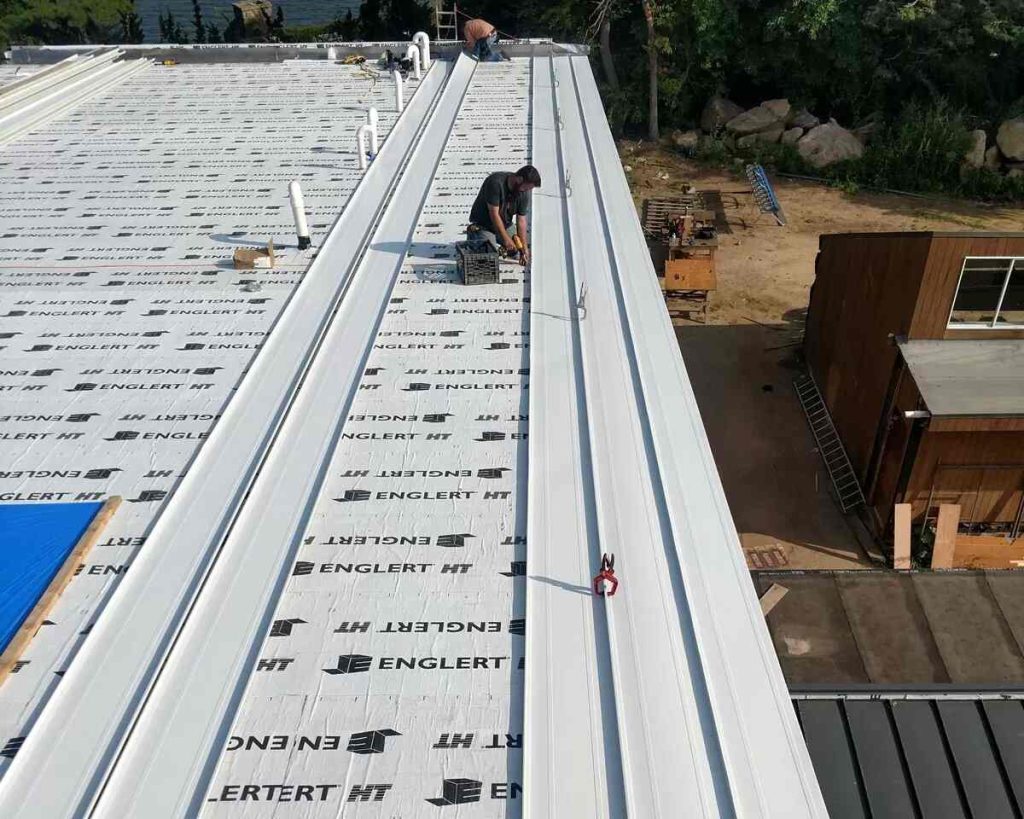
Metal roofs run hot in Texas sun. We specify high-temperature underlayment, including our self-adhered PMRS HD Pro HT membrane. A self-adhered sheet bonds as designed to clean sheathing. Over loose granules and curled tabs, it cannot seal the way it should.
Flashings and ventilation get rebuilt
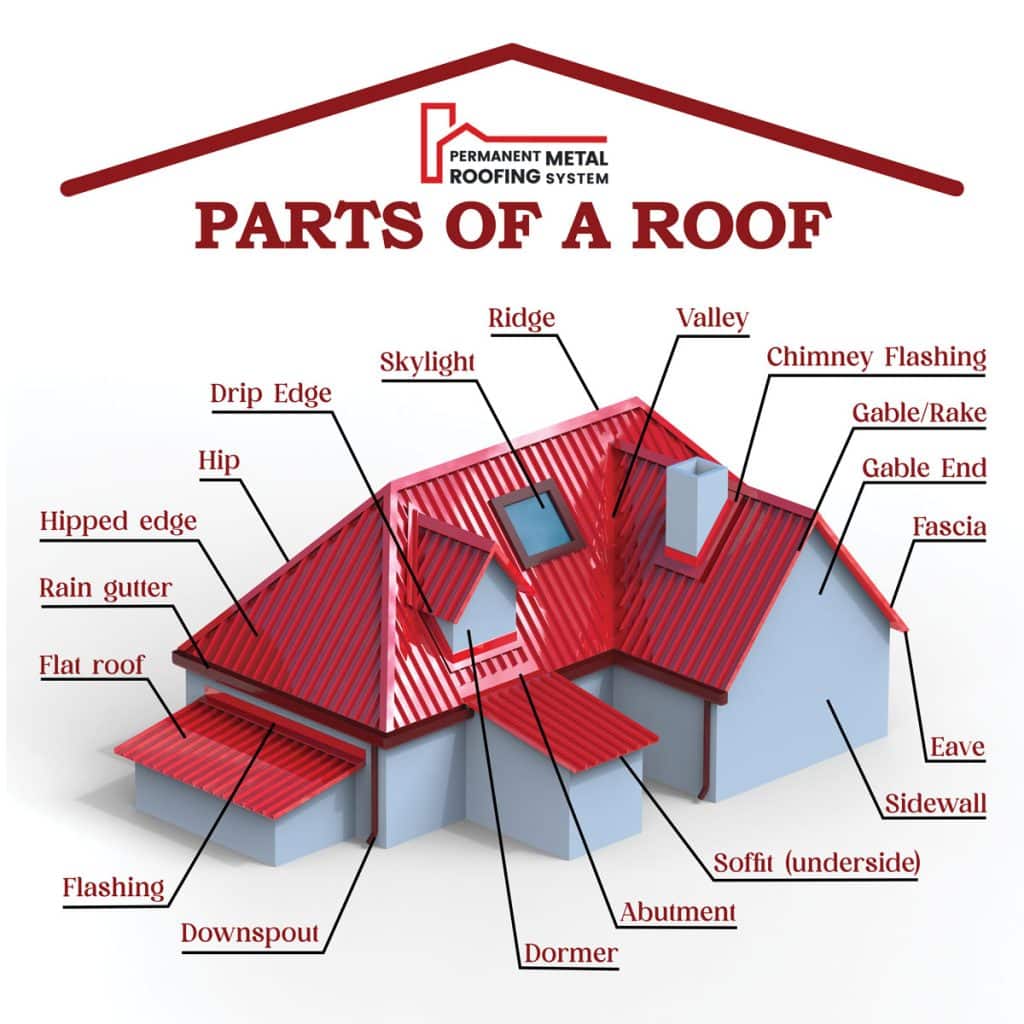
Walls, chimneys, skylights and pipes all need flashing that ties into the new panels. Ridge and soffit ventilation can be corrected at the same time. On an overlay, those details are harder to reach and easier to compromise.
When can an overlay make sense?
An overlay can be a reasonable choice when every one of these statements is true:
- There is only one layer of shingles, and it lies flat.
- The deck feels solid underfoot and shows no stains or sag from the attic.
- The panel maker allows installation over shingles, or the system carries its own loads.
- Wall and chimney flashing can still be rebuilt properly.
- You accept that the deck stays uninspected under the new roof.
Overlays are often considered for exposed-fastener panels on shops and barns. Some installers also lay battens or new sheathing over the shingles to build a flat, separate base. That adds cost and raises the roof edge, so price it against a straight tear-off.
How much weight does a second roof add?
Less than most people expect. Englert lists steel standing seam at about 85 to 120 pounds per 100 square feet, versus 275 to 425 pounds for asphalt shingles. So a steel overlay on one shingle layer usually weighs less than two layers of shingles. The code still requires the framing to carry it, and older or altered framing deserves a look from the attic.
What does a tear-off cost?
Tear-off is a modest line item next to the roof itself. Our current rate is $1.25 per square foot of roof for the first layer of shingles. Each additional layer adds $0.75 per square foot. Dumpsters are listed separately on the written estimate, and deck repair, if any, depends on what the tear-off reveals.
On a 2,500-square-foot roof with one layer, tear-off comes to about $3,125. With two layers, add about $1,875, and remember the code requires that roof to come off anyway. Prices are current as of October 2026. The metal roof cost calculator adds tear-off for you.
What this means for DFW homeowners
Most homes in Dallas-Fort Worth were built before 2000, so many are on their second or third shingle roof. If yours has two layers, the code settles the question: everything comes off. If it has one, a tear-off still buys you a checked deck, flat panels and new flashing for a modest added cost.
Hail adds another reason. After a storm, a tear-off lets everyone see the deck and document what was damaged. If you plan to file a claim or ask for an impact-resistant credit, talk with your carrier before you choose an overlay.
Our installation process page walks through each step of a full replacement. The residential metal roofing page covers the standing seam and shingle-style systems we install on homes.
Metal Over Shingles FAQ
Is it legal to put a metal roof over shingles in Texas?
Generally yes, within limits. The 2021 International Residential Code, adopted with amendments by Dallas, Fort Worth, Plano and Arlington, allows a recover over one sound layer when the panel maker permits it or the metal system carries its own loads. A roof with two or more layers must be torn off. Your city permit office has the final say.
How many layers of shingles can be under a metal roof?
One at most. Under the 2021 IRC, a recover is not allowed when the existing roof already has two or more layers of any covering. A two-layer roof must be stripped to the deck before metal goes on, and a single existing layer must be dry and sound enough to serve as a base.
Does putting metal over shingles affect the roof warranty?
It can. Coverage depends on the panel maker’s installation rules and on the installer’s own terms. Ask any contractor to state in writing whether an overlay changes the warranty. The terms of our Lifetime Non-Prorated Limited Warranty are on our warranties page.
Do I need a permit to replace a roof in Dallas or Fort Worth?
Yes for a full replacement in both cities, based on their permit rules as of 2026. Dallas requires a re-roof permit for whole-roof work, and Fort Worth requires a building permit even when the roofing material stays the same. Other DFW cities set their own rules, so confirm with your city before work starts.
Can a metal roof go over hail-damaged shingles?
Sometimes, but it is rarely the smart move. Hail that breaks shingles often loosens flashing and can hide soft decking, and an overlay covers that evidence. A tear-off lets you, your adjuster and your roofer see the deck and document the damage before the new roof goes on.
Overlay or tear-off?
Find Out What Is Under Your Shingles
We will check the layers and the deck, then price your new metal roof both ways in a free written estimate.