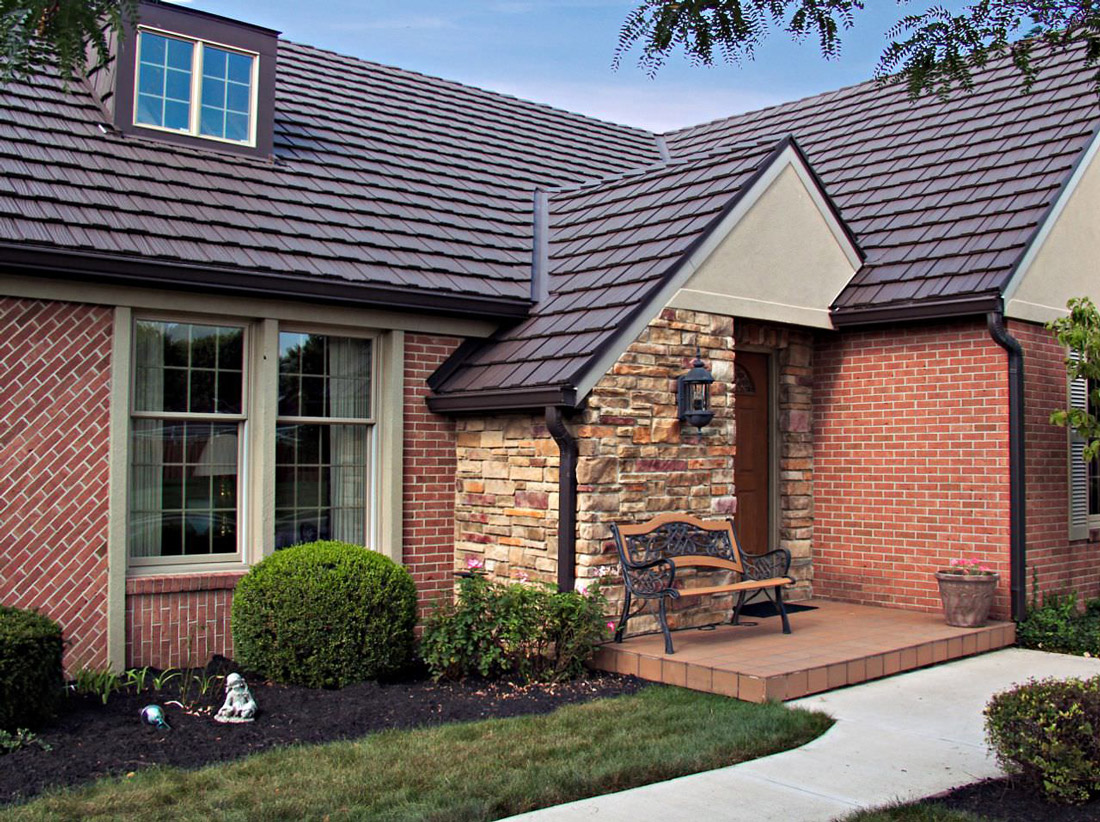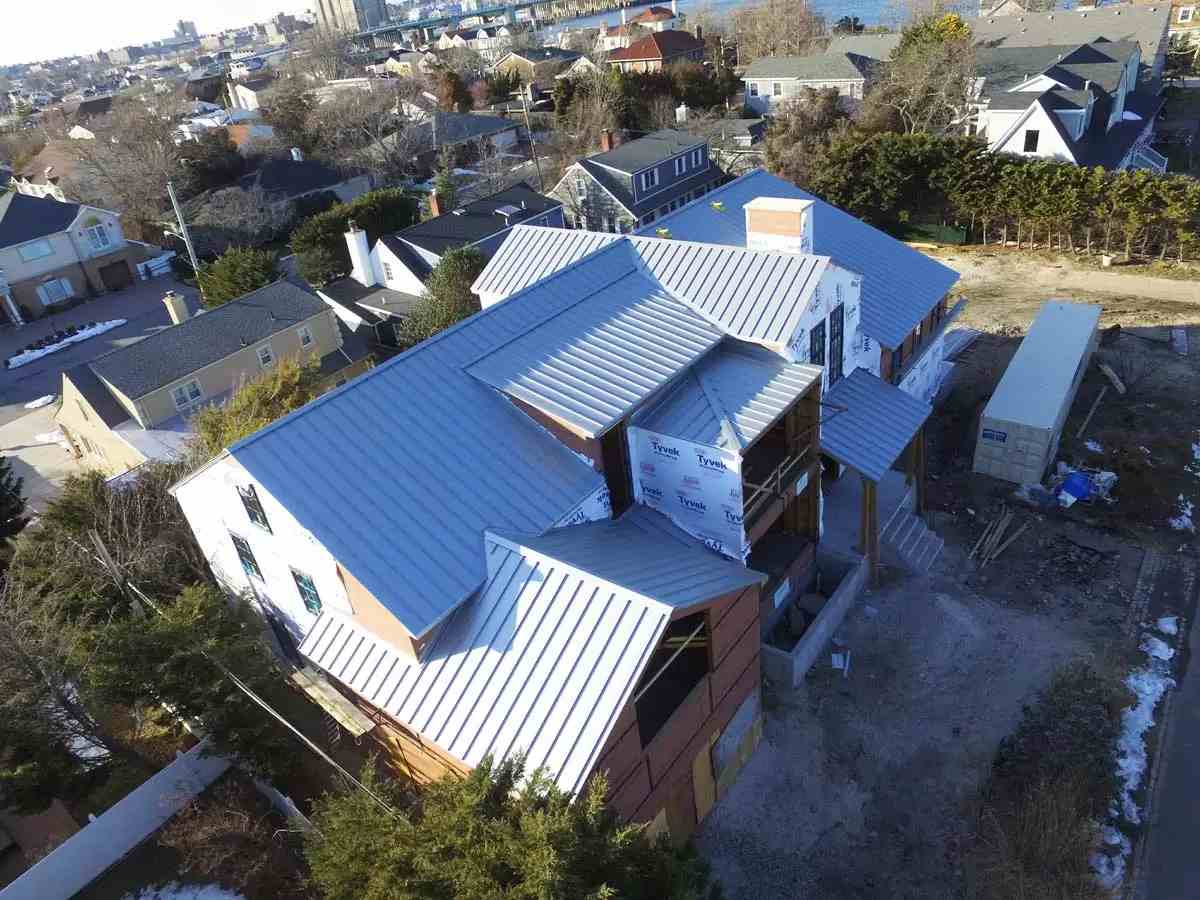
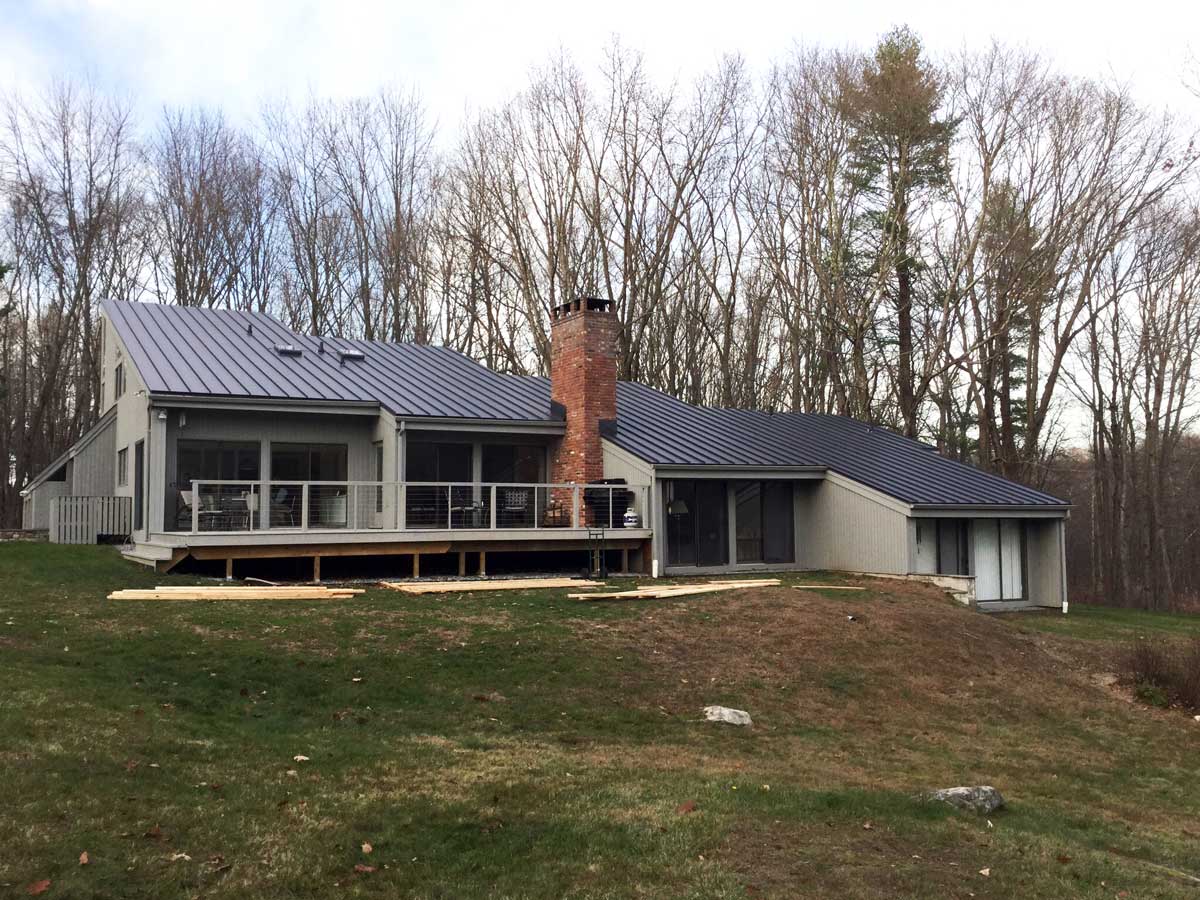
In the 24 gauge vs 26 gauge metal roof decision, the thicker 24-gauge steel is our standard for Dallas-Fort Worth houses. It is roughly 28 percent thicker, dents less in hail, spans farther and shows less waviness. 26-gauge costs a little less and still makes a sound roof in the right place.
Gauge numbers run backward, so a smaller number means thicker steel. We roll-form standing seam in 26, 24 and 22 gauge Galvalume steel, so we have no reason to push one over another. Here is how we decide which gauge belongs on which roof.
How much thicker is 24 gauge than 26 gauge?
About 28 percent. Coil supplier Sheffield Metals lists 24-gauge at a minimum of 0.023″ and 26-gauge at a minimum of 0.018″. That sounds like a small step. In bending, though, a sheet’s stiffness rises roughly with the cube of its thickness. So 28 percent more steel buys about twice the panel stiffness.
The extra steel adds a little weight. Sheffield puts 24-gauge sheet at roughly 0.9 to 1.1 pounds per square foot and 26-gauge at about 0.7 to 0.9. Either one is a fraction of what asphalt shingles weigh, so the framing on a typical house does not care which you pick.
| Factor | 26 gauge | 24 gauge | 22 gauge |
|---|---|---|---|
| Minimum thickness | About 0.018″ | About 0.023″ | Heavier still |
| Bending stiffness | Baseline | Roughly twice 26 gauge | Higher again |
| Hail dent resistance | Fair | Good | Strongest of the three |
| Visible oil canning | Most likely | Less likely | Least likely |
| Spans over open framing | Shortest | Longer | Longest |
| Our installed house price | $14 per sq ft (SMP finish) | $15 per sq ft (Kynar 500 finish) | Quoted per project |
| Where we use it | Porches, outbuildings, tight budgets | Most DFW homes | Commercial, long spans, high uplift |
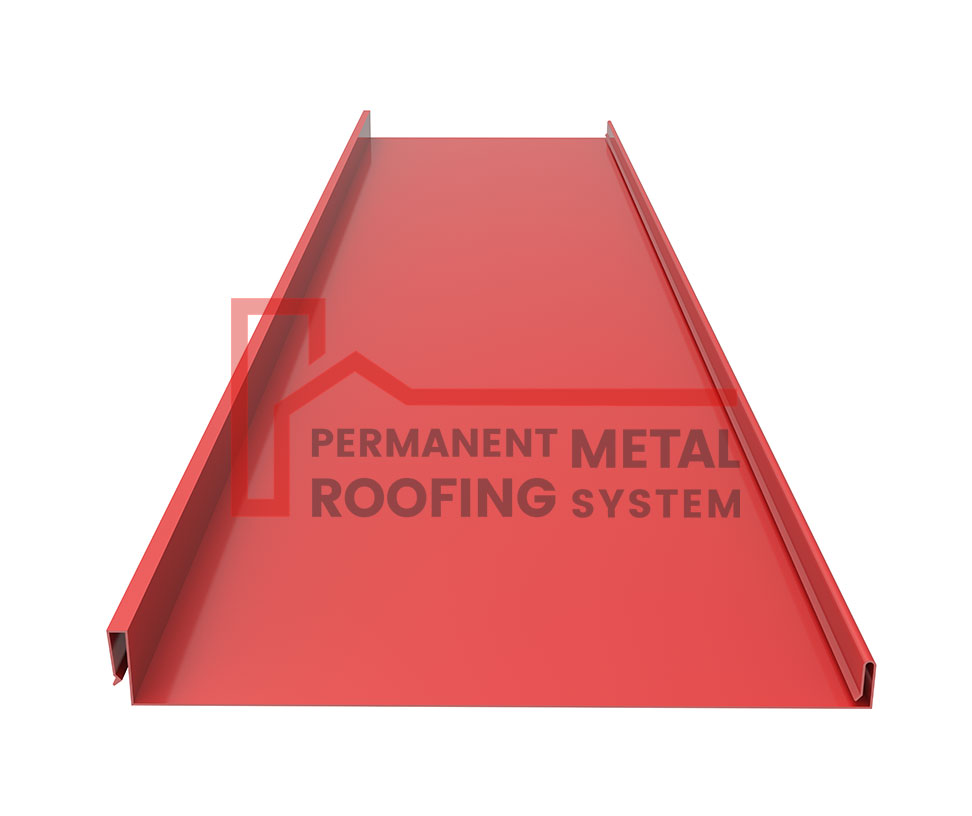
Gauge options vary by profile. Our 1.5″ snap lock, 1.75″ snap lock and 2″ mechanical lock come in all three gauges. The 1″ and 1.5″ mechanical lock systems come in 26 and 24 gauge.
Does 24 gauge hold up better in hail?
Yes for dents, though not because of the impact rating. Texas insurance credits hinge on UL 2218 classes, and the Texas Department of Insurance says each carrier sets its own discount. The test checks whether a steel ball cracks or ruptures the covering. Sheffield notes that its 26-gauge systems reach Class 4, the top class, yet still dent more easily than thicker steel.
Dents matter in Texas because coverage for them keeps shrinking. TDI approved an optional cosmetic hail damage exclusion for impact-resistant roofs in 1998. Many carriers now attach their own cosmetic exclusions as well. If a storm leaves dents but no leaks, you may be living with them. Stiffer 24-gauge panels take more hail before they show it.
No metal roof is immune to large hail. The 2-inch stones that hit parts of North Texas in recent storms can mark any panel, even 22-gauge. Gauge shifts the odds in your favor. It does not rewrite them.
When does gauge change how far a panel can span?
Gauge matters most when panels cross open framing instead of a solid deck. Most DFW homes have a plywood or OSB deck, so the panel never bridges a gap. Porches, carports, pavilions and metal buildings often use purlins instead. There, thicker steel spans farther and resists more uplift.
The spec sheets for our 1.75″ snap lock and 2″ mechanical lock both allow open framing as well as a solid deck. On those jobs, the gauge comes from load tables and wind design, not taste. Site-specific engineering is available on request for builders and architects.
Wind is the other load. North Texas storms have produced straight-line gusts of roughly 80 to 105 mph in recent years. Clip spacing, seam type and deck attachment do most of the work against uplift. Heavier steel helps the seam keep its shape while they do it.
Does gauge change oil canning?
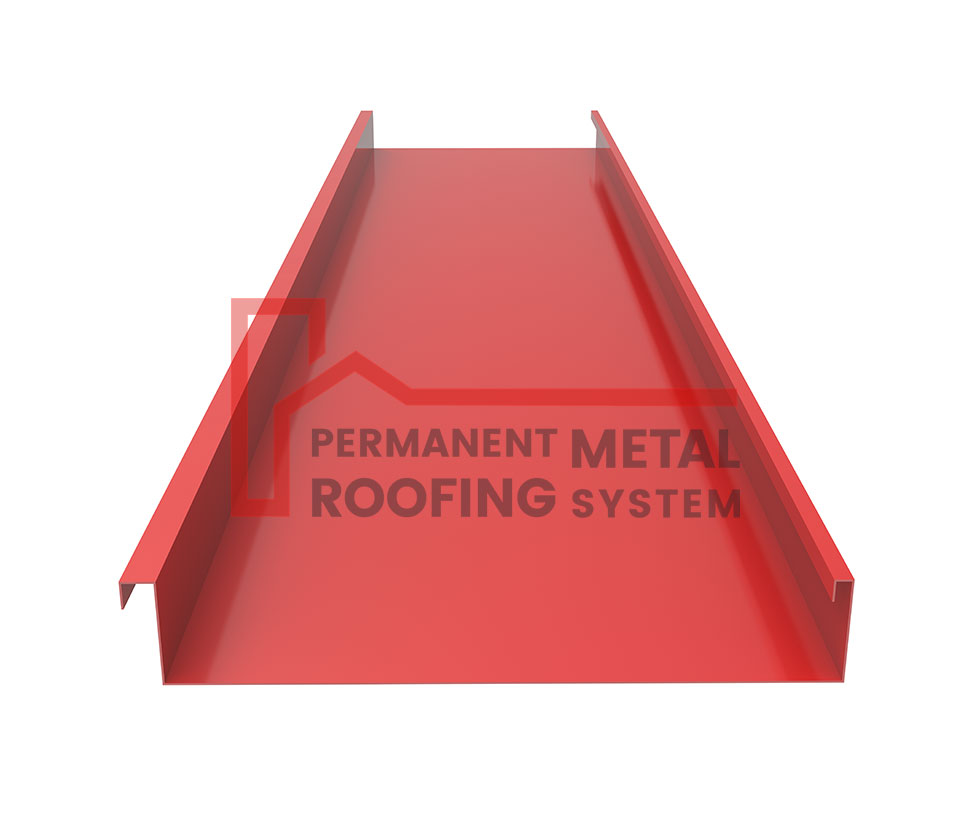
Thicker steel shows less waviness, but no gauge removes it. Oil canning is the soft rippling you sometimes see in flat pans. A 24-gauge panel resists it better than 26-gauge, and striations help either one. Ribs and striations are optional on every PMRS profile. Our oil canning guide covers the other causes.
What is the real cost difference between 24 and 26 gauge?
On our price list the gap is small. A 24-gauge Galvalume roof with a Kynar 500 finish, installed on a house, runs about $15 per square foot of roof. Our 26-gauge option with an SMP finish runs about $14 per square foot. Both prices are current as of October 2026.
On a 2,500-square-foot roof, that works out to about $37,500 for 24-gauge versus $35,000 for 26-gauge, before tear-off and add-ons. Part of that gap is the paint, not the steel. Solid PVDF colors on our spec sheets carry a 30-year finish warranty, while SMP carries 15 years.
Run your own roof size through the metal roof cost calculator. It uses the same live prices.
When does 26 gauge still make sense?
26-gauge is a sound choice where hail exposure, spans and looks matter less. A well-made 26-gauge panel can meet the recognized wind, fire and impact ratings. We still use it on these jobs:
- Porch roofs, patio covers and carports built over a solid deck.
- Sheds, shops and detached garages.
- Wall panels and soffits, where hail rarely strikes square.
- Tight budgets, when the real choice is 26-gauge metal or another shingle roof.
- Lighter colors with narrow, striated pans, which hide waviness well.
For a whole-house roof in the hail corridor, we still recommend 24-gauge. The price gap is a small share of the job. The dent resistance lasts as long as the roof does.
What this means for DFW homeowners
If you want one roof for the next several decades, buy 24-gauge with a PVDF finish. Texas has led the nation in major hail events for 11 straight years, according to NICB analysis, and Dallas-Fort Worth sits in the thick of it. Save 26-gauge for porches, outbuildings and tight budgets. Ask every bidder these questions:
- What gauge is quoted, and is the thickness a minimum or a nominal figure?
- Is the finish PVDF (Kynar 500 or Hylar 5000) or SMP?
- Are striations or ribs included in the panel?
- Has this exact panel passed UL 2218, and in which class?
- Will the panels sit on solid sheathing, or span open framing?
Next, compare profiles on our standing seam systems page or read how impact ratings work on our Class 4 metal roofing page. Still deciding on the metal itself? Our steel vs aluminum guide covers that choice.
Metal Roof Gauge FAQ
Is 26 gauge metal roofing strong enough for a house in Texas?
Yes, structurally. Over a solid deck, a quality 26-gauge standing seam panel can meet recognized wind, fire and impact ratings. Its weakness is cosmetic: it dents and shows waviness more readily than 24-gauge. In hail-prone DFW we recommend 24-gauge for the main roof and 26-gauge for porches and outbuildings.
Is a 24 gauge metal roof automatically Class 4?
No. A UL 2218 class belongs to a specific tested product and assembly, not to a gauge. Ask for the test listing for the exact panel you are buying, and ask your insurance carrier what documentation it accepts for an impact-resistant roof credit.
How much more does 24 gauge cost than 26 gauge?
On our current price list, a 24-gauge Kynar 500 roof installed on a house is about $15 per square foot of roof, and 26-gauge with an SMP finish is about $14. The difference also pays for the longer-lasting paint system, not just the thicker steel.
Should I consider 22 gauge for my home?
Rarely. 22-gauge is stiffer still and suits commercial roofs, long spans over open framing and high-uplift designs. On a typical house over a solid deck, 24-gauge delivers most of the benefit at a lower price. We form 22-gauge on our 1.5-inch and 1.75-inch snap lock and 2-inch mechanical lock profiles.
Does a thicker gauge make a metal roof quieter?
Only slightly. Over a solid deck, the sheathing, underlayment and attic insulation do most of the quieting. Next to those layers, the step from 26-gauge to 24-gauge makes a minor difference in rain noise inside the house.
24 or 26 gauge?
See Both Gauges Priced for Your Roof
Your free written estimate can show 24-gauge and 26-gauge side by side, measured from your actual roof.