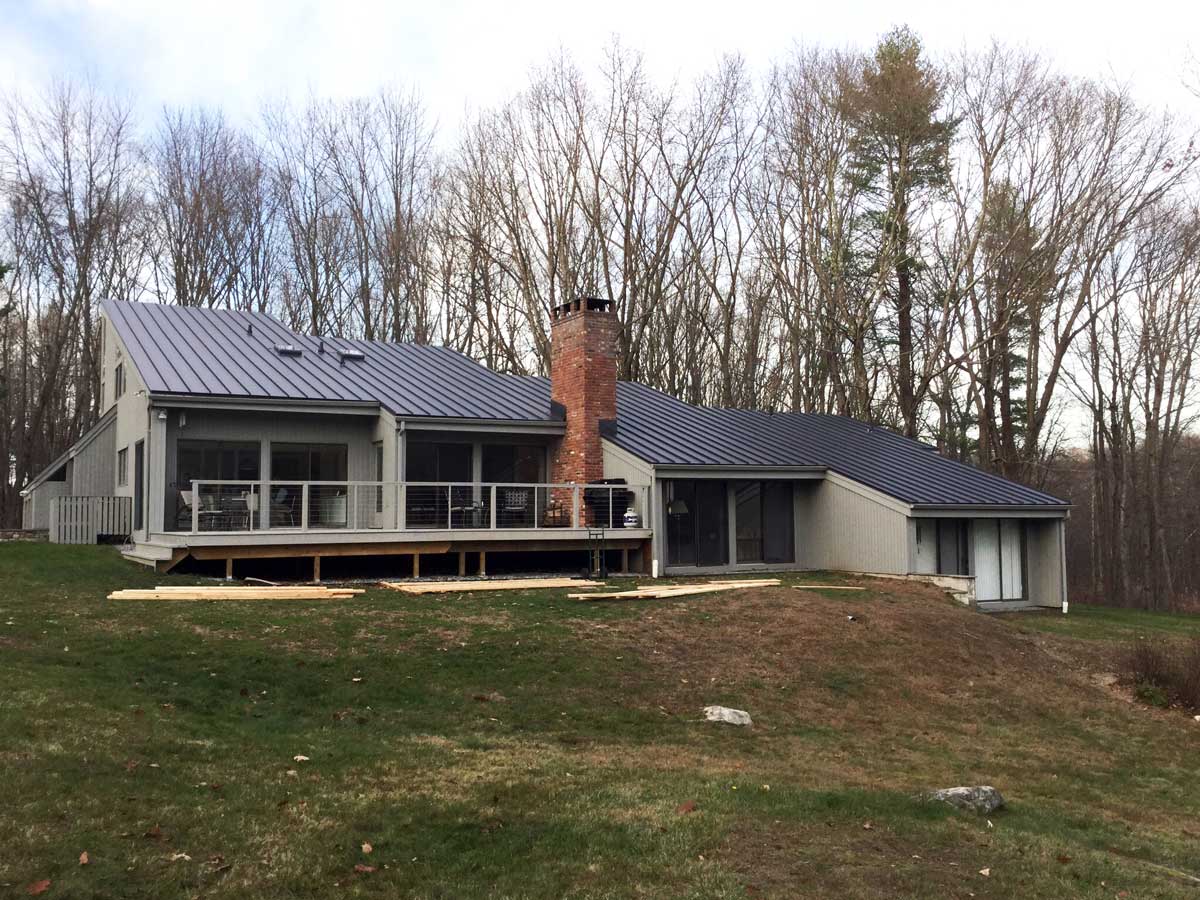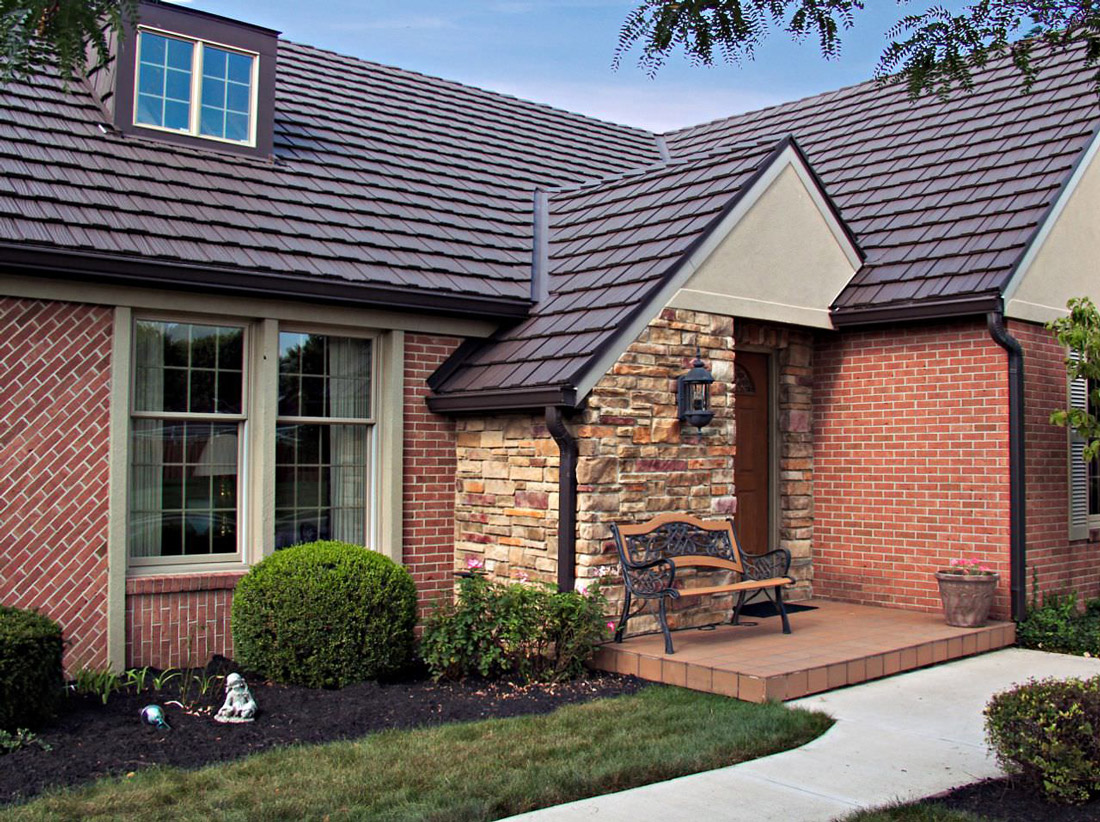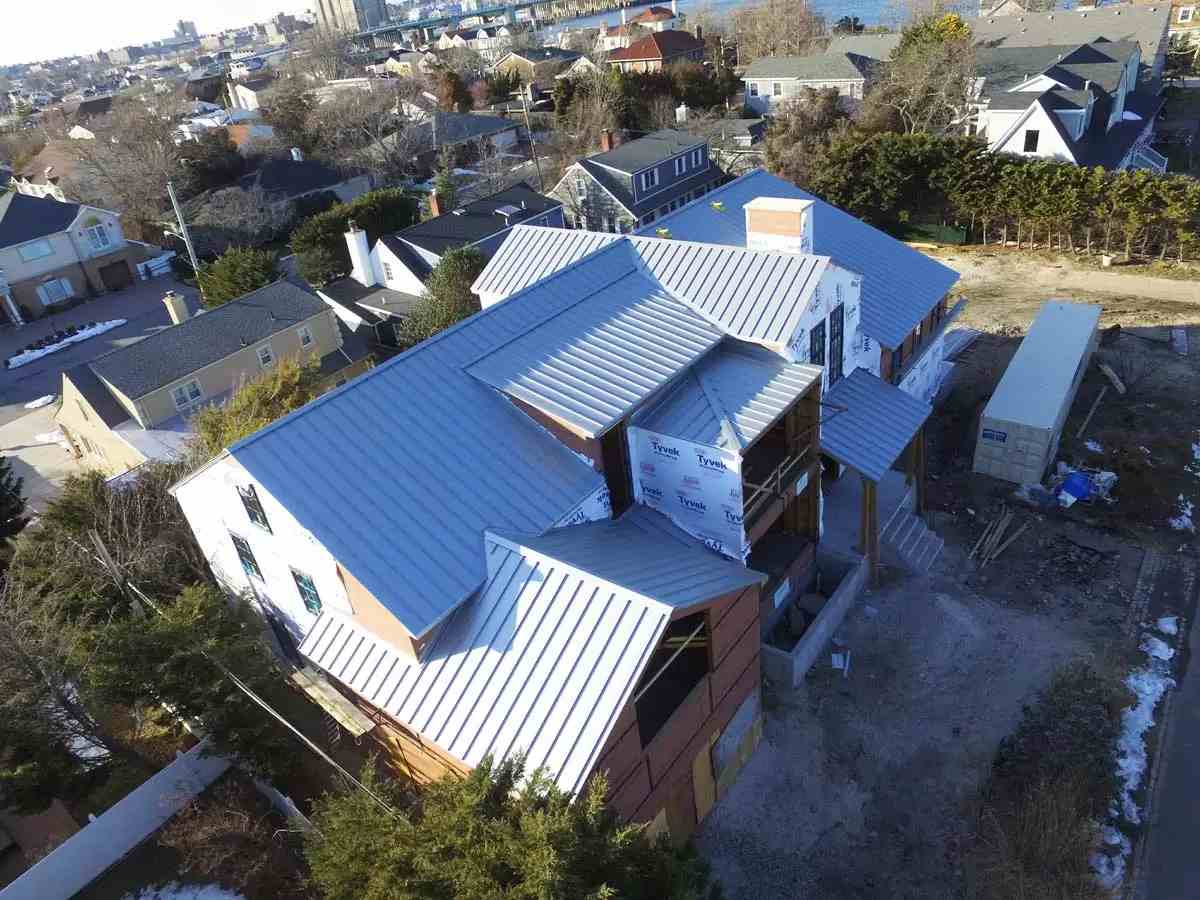
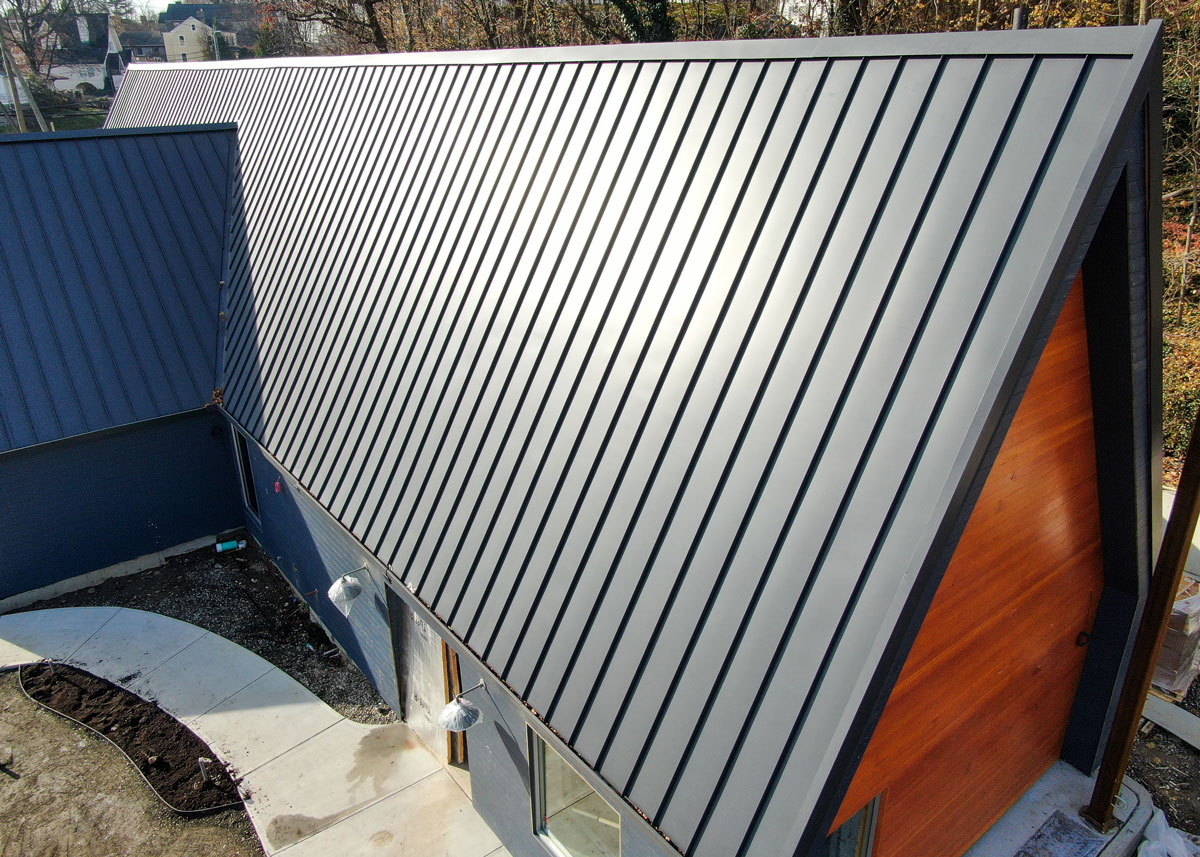
Oil canning is the soft waviness you sometimes see in the flat pans of a metal roof. It is a cosmetic trait of thin, cold-formed metal, not a leak and not a loss of strength. The Metal Construction Association says plainly that no manufacturer or installer can guarantee to prevent it. What a good fabricator can do is stack the odds in your favor.
We roll-form our own standing seam panels and bend our own trim, so we control more of the causes than a crew that buys panels elsewhere. That still does not make any roof ripple-free. Here is what causes oil canning, what reduces it and what you should expect.
What does oil canning look like?
It shows up as gentle waves across the flat part of a panel, between the seams. You see it most in low-angle morning and evening light, on glossy dark colors and on wide pans. From the street at midday, the same roof may look perfectly flat.
Texas heat makes it come and go. The Metal Construction Association’s technical bulletin notes that panel surfaces can run more than 100 degrees above the air temperature. A wave that shows at sunrise can flatten by noon as the steel expands, then return as it cools.
What causes oil canning?
Oil canning comes from stress locked into the metal or added during installation. The MCA bulletin groups the causes under production, material, panel design and installation. In practice, these are the main ones:
- Coil stress: rolling at the mill can leave uneven tension, such as wavy edges or a full center.
- Slitting: cutting a wide coil into narrower strips releases and shifts those stresses.
- Roll forming: worn tooling, poor setup or the wrong feed rate adds stress as the seams form.
- An uneven deck: humps, dips and out-of-plane framing push panels out of flat.
- Installation: over-engaged seams, over-driven fasteners and fastening out of sequence.
- Restrained movement: a panel pinned at both ends cannot expand, so it buckles instead.
- Rough handling: twisting long panels while carrying them up to the roof.
How can oil canning be reduced?
No single fix works, but each of these steps lowers the odds. Some happen in our shop, some on your roof and some are choices you make.
| Factor | Why it helps | How we handle it |
|---|---|---|
| Striations or ribs | Break up the flat pan, so waves have less room to show | Optional on every PMRS profile |
| Thicker metal | A stiffer pan resists buckling | 24-gauge is our standard on homes; 22-gauge on several profiles |
| Narrower panels | Less flat area between seams | We form widths from 12″ up; narrower suits dark colors |
| Low-gloss or textured finish | Hides waves that glossy paint reveals | Low-gloss Kynar and crinkle finishes |
| Lighter colors | Less contrast between light and shadow | Compare options on our color chart |
| Flat deck | Gives the panel an even bed | Deck checked and corrected before panels go down |
| Floating clips | Let panels expand and contract freely | One fixed point, floating clips elsewhere |
| Consistent forming and trim | Panels are not forced into trim that does not fit | In-house roll forming and computerized trim bending |
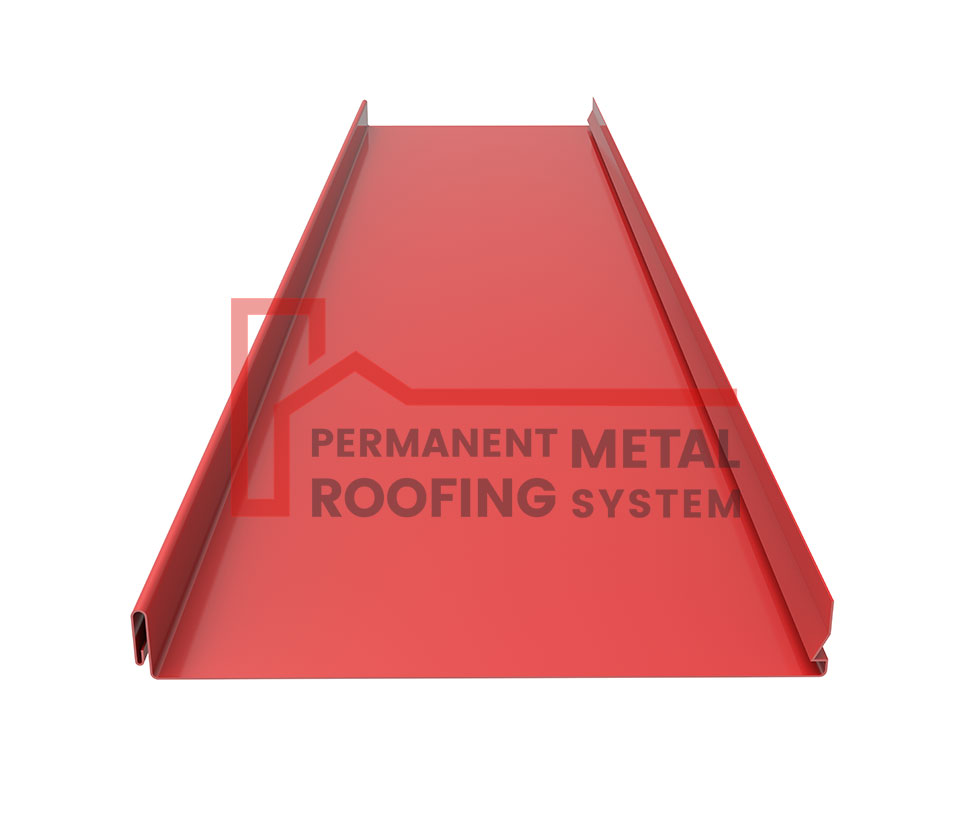
Finish choice matters more than many people expect. Our crinkle finish adds a fine texture that scatters light, and low-gloss PVDF colors do something similar. The color chart shows which shades come in each finish.
How does in-house roll forming help?
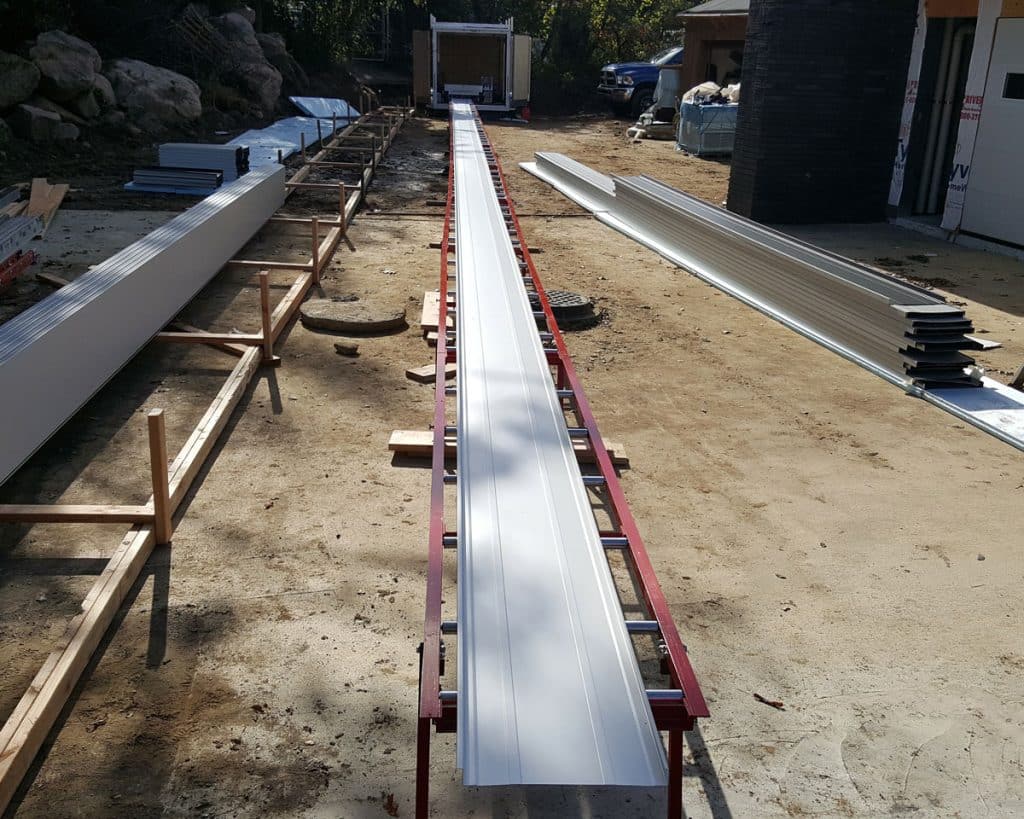
It brings the stress-causing variables under one team’s control. We form panels on our own roll-forming equipment and cut each one to the length of its roof run. That means one continuous panel from eave to ridge, no end laps in the field and less handling between the machine and the roof.
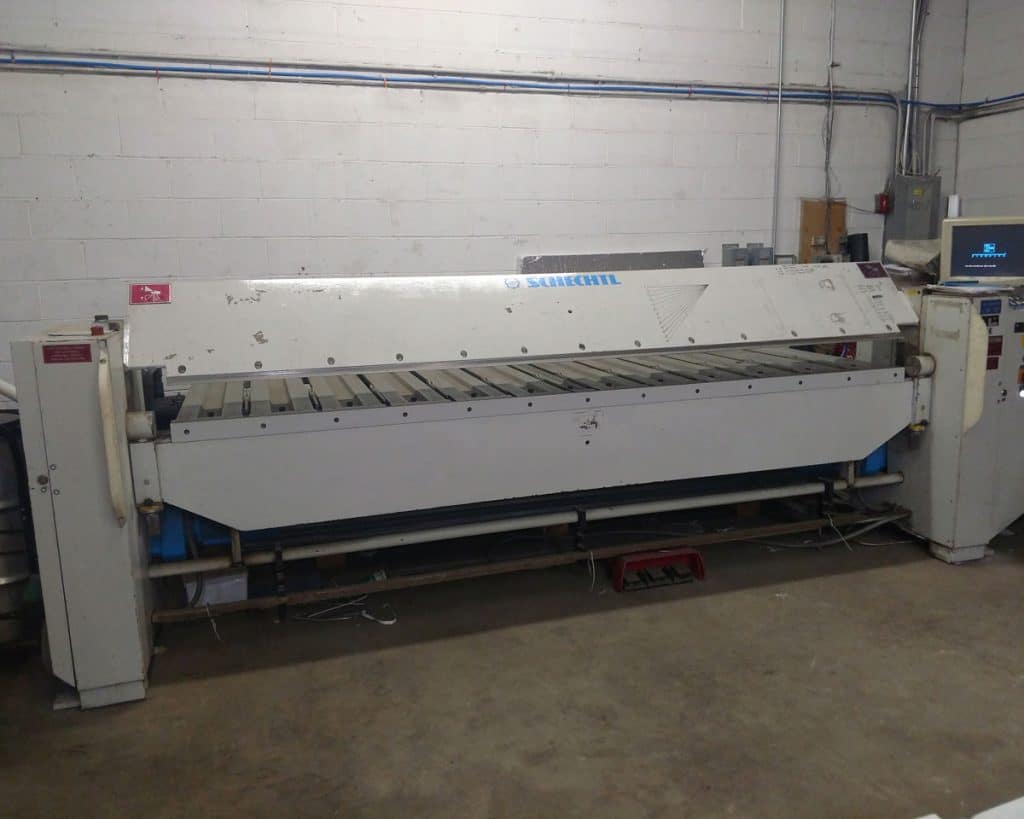
Machine setup is our responsibility from coil to finished panel. Trim, flashing and closures are bent on computerized equipment, so each piece comes out the same size and square. Panels then sit in trim that fits them instead of being forced into it.
The company’s long-held view is simple. When one team controls the whole system, consistency goes up and problems like oil canning go down. Note the wording: down, not gone.
What should you expect once the roof is on?
Some waviness in raking light can be normal, even on a well-built roof. The MCA bulletin says that, absent specific contract requirements, oil canning alone should not be grounds to reject panels. It does not weaken the panel, and it does not cause leaks.
The time to manage it is before the order goes in. Decide on striations, panel width, gauge and finish with your eyes open. Ask to see a sample panel in your profile and color, ideally outdoors in low sun.
Can oil canning be fixed after installation?
Sometimes, but the options are limited. If a pinched clip, an over-driven fastener or a deck hump is the cause, correcting that point can relax the panel. Replacing a panel will not help if the cause sits underneath it, because the new panel takes the same shape. Never let anyone hammer or heat a panel to flatten it.
What this means for DFW homeowners
DFW roofs swing from mild mornings to scorching afternoons for months at a time, so panels move every day. Dark, glossy colors on wide pans show oil canning most. If you love a dark modern look, pair it with striations, 24-gauge steel, a narrower pan and a low-gloss finish. Before you sign, check these points:
- Are striations or ribs included in the panel?
- What are the gauge and the panel width?
- Is the finish low-gloss or textured, especially for a dark color?
- How will the deck be checked for flatness?
- Are panels formed to full length, or spliced on the roof?
- Does the clip layout allow the panels to float?
Compare profiles on our snap lock and mechanical lock pages, and see our fixed and floating clips. For the gauge question in depth, read 24 vs 26 gauge metal roofing.
Oil Canning FAQ
Is oil canning a defect?
Usually not. The Metal Construction Association treats it as an inherent trait of light-gauge, cold-formed metal and says no manufacturer or installer can guarantee to prevent it. Unless a contract sets a specific standard, oil canning alone is generally not grounds to reject panels. Severe waviness from a damaged deck or poor installation is a different matter.
Do striations stop oil canning?
They reduce it but do not eliminate it. Striations are shallow lines rolled into the pan that stiffen it and break up reflections, so any waves are harder to see. Ribs and striations are optional on every PMRS standing seam profile.
Does oil canning cause leaks?
No. Oil canning is an appearance issue in the flat of the panel. The seams, clips, underlayment and flashing keep water out, and waviness does not open them. If you see waviness and a leak together, look for a separate cause such as a damaged deck or failed flashing.
Is oil canning worse on dark colors?
It is more visible on them. Dark, glossy colors show light and shadow across a wavy surface, while lighter and low-gloss colors hide it. Dark roofs also run hotter in the sun, which adds thermal movement.
Will thicker metal eliminate oil canning?
No. Heavier gauge makes a pan stiffer and less likely to ripple, so 24-gauge shows less oil canning than 26-gauge. Even 22-gauge can show it if the deck is uneven or the panels cannot move. Gauge works best combined with striations, narrower panels and careful installation.
Planning a dark standing seam roof?
Spec the Panel Before It Hits the Roll Former
We will walk you through striations, width, gauge and finish, then put it all in a free written estimate.