UL 2218 impact ratings, explained
Class 4 Metal Roof Options for Texas Hail Country
A Class 4 metal roof can lower your premium and cut storm repairs in Texas, but only when the right product is installed and documented. Here is what the rating means, which Permanent Metal Roofing Systems systems carry one, and how insurers treat it.
- 20+ years of experience
- Lifetime limited warranty
- Free written estimates
What does UL 2218 Class 4 mean on a metal roof?
UL 2218 is the impact test Texas insurers rely on for roof coverings. Steel balls are dropped onto the roofing from set heights, and the product is rated Class 1 through Class 4. Class 4 is the top rating: the sample survives a 2-inch steel ball dropped from 20 feet without cracking or rupturing.
Notice what the test measures. It looks for cracks, splits and openings that would let water in. It does not grade dents. A Class 4 metal roof can still dent in a severe storm, which is why the cosmetic damage question below matters so much here.
Hail is not a rare event in North Texas. For 11 years running, Texas has logged more major hail events than any other state, per NICB and Verisk. In 2025 alone, hail 2 inches or larger struck more than 235,000 Texas homes.
The rating belongs to a specific product or tested assembly, not to metal in general. Gauge, panel profile, substrate and the deck beneath all affect the result. That is why we confirm the listing for your exact specification before you count on it.
Which PMRS roof systems carry Class 4 ratings?
Several product lines we install carry manufacturer-published Class 4 ratings. Our standing seam can be specified to match a tested assembly. The table shows who stands behind each rating.
| System | Material | Who publishes the rating | Class 4 status | Notes |
|---|---|---|---|---|
| EDCO ArrowLine Shake | Steel | EDCO | Listed by EDCO as UL 2218 Class 4 | EDCO also lists wind testing to 160 mph |
| EDCO Generations HD | Steel | EDCO | Listed by EDCO as UL 2218 Class 4 | Cedar-shake look with a PVDF finish |
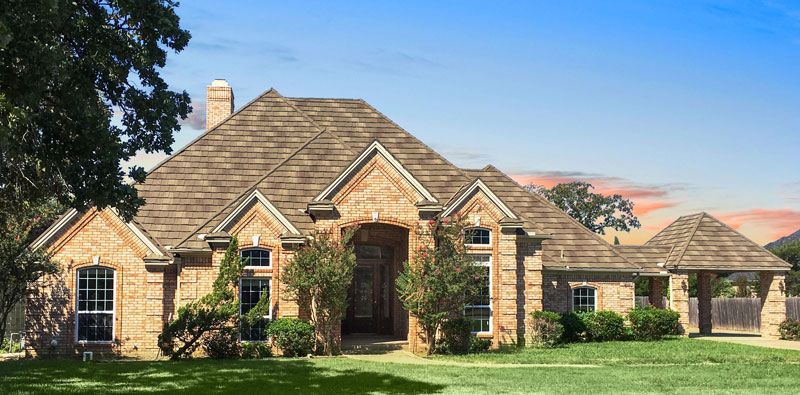
| DECRA Shake, Shake XD, Shingle XD, Tile and Villa Tile | Stone-coated steel | DECRA | DECRA publishes Class 4 ratings for its lines | Granule texture hides hail marks |
| Classic Country Manor Shake, Oxford, Rustic, Slate Rock Oxford and Grandetile | Aluminum | Classic Metal Roofing Systems | Listed by Classic; confirm per product | Lightweight, and aluminum will not rust |
| PMRS snap lock and mechanical lock standing seam | Steel, aluminum, copper, zinc | Depends on the tested assembly | Available when panel, gauge and deck match a tested listing | We confirm the paperwork before you sign |
| PBR, 7.2 rib and corrugated | Steel | Panel or coil supplier | Varies by profile and gauge | Common on shops and barns |
Manufacturers update their listings, so ask us for the current certificate for your product and color before you file anything with your insurer.
Will hail still dent a Class 4 metal roof?
It can. Hail big enough to dent steel can do so on any roof, rated or not. The difference is that a Class 4 roof is far less likely to crack, split or leak, so most marks are cosmetic rather than functional.
Cosmetic vs. functional damage
Cosmetic damage changes how the roof looks but does not let water in or stop the roof working. Functional damage does: punctured panels, split seams, broken fasteners, torn sealant or bent flashing that opens a gap. Insurers treat the two very differently.
The cosmetic exclusion in Texas policies
In 1998, TDI adopted an optional endorsement that excludes cosmetic hail damage on policies receiving an impact-resistant roof credit. Many carriers now attach their own cosmetic exclusions far more broadly. Look for one in your policy, and ask your agent what removing it would cost.
Texas courts have split on how far these exclusions reach, so outcomes vary. Nothing on this page is legal or insurance advice. Your policy wording controls.
Which gauge and finish resist hail best?
Thicker metal and surfaces that hide marks resist hail best. For standing seam on a house, we treat 24-gauge steel as the baseline.
| Option | Thickness or surface | Hail behavior | Where it fits |
|---|---|---|---|
| 26-gauge steel | About 0.018 inch | Dents more easily, though some assemblies carry ratings | Budget roofs, porches, outbuildings |
| 24-gauge steel | About 0.023 inch, roughly 28 percent thicker | Our standard for homes facing hail | Most DFW houses |
| 22-gauge steel | Heavier still | The stiffest steel we form, at a higher cost | Commercial and high-exposure roofs |
| .032 or .040 aluminum | Softer metal | Will not rust, but dents show sooner than on steel | Architectural and modern designs |
| Stone-coated steel | Granule surface | Texture disguises small dents well | HOA streets and traditional homes |
| Striated or low-gloss panels | Pencil ribs or matte finish | Shallow dents are harder to see | Any standing seam roof |
Gauge also fights oil canning, the waviness some flat panels show in low sun. Our 24 vs. 26 gauge guide covers the trade-offs in detail.
How do Texas insurance credits for Class 4 roofs work?
The Texas Department of Insurance says a roof must pass UL 2218 to earn an impact-resistant credit, and Class 4 earns the largest. TDI does not set the amount. Each insurer decides its own credit and which documents it accepts.
Reported credits in 2025 and 2026 range from roughly 5 to 35 percent off the wind and hail portion of the premium. That portion is large in DFW, where single-family premiums commonly ran $5,400 to $6,200 a year in 2026. We never promise a discount, so ask your carrier for its number before you choose a product.
Insurers have good reason to care. Industry research has found that homes with impact-resistant roofs file about 40 percent fewer hail claims, with about 55 percent lower losses. State Farm alone handled about 95,200 Texas hail claims in 2025, averaging around $15,000 each.
Read TDI’s own roofing discount guidance, then our guide to Texas insurance discounts for impact-resistant roofs.
What documents does your insurer need?
Most carriers want proof of what was installed, who installed it and when. We provide the documents that are ours to provide and help you gather the rest.
- The product name, manufacturer and impact class from the published listing
- The UL certificate or manufacturer letter for that product
- An invoice showing the product, the address and the installation date
- Photos of product labels or packaging taken during installation
- A signed installation certificate from the contractor
- The permit or final inspection record, where your city issues one
Coastal homes insured through TWIA need TDI form PC068 and labeled products. Inland carriers use their own forms, so ask which ones they want before the roof goes on.
How do you spot a storm chaser after a DFW hailstorm?
Be wary of anyone who shows up uninvited after a storm and pushes you to sign that day. The Texas Attorney General warns about out-of-town crews, leftover-materials pitches and demands for cash up front.
- Get more than one written estimate, and let your adjuster inspect before you sign
- Never sign your insurance check over to a contractor
- Never pay in full before the work is done
- Look for a physical local address and city registration where one is required
- Remember that Texas has no state roofing license, so “licensed” alone tells you little
- If you sign at your door, Texas law gives you three business days to cancel
Report suspected roofing scams to the Attorney General’s consumer protection hotline at 800-621-0508. Our office is at 3100 Manchester Dr in Mesquite, and you are welcome to call before you sign anything with anyone.
Can a roofer waive or pay your deductible in Texas?
No. Since September 1, 2019, Texas law (HB 2102) bars contractors from paying, waiving, rebating or absorbing a homeowner’s insurance deductible. Doing so is a Class B misdemeanor, with a fine of up to $2,000 and up to 180 days in jail.
Roofing contracts must carry a bold notice that the homeowner owes the deductible, and insurers may ask for proof it was paid. PMRS does not waive or absorb deductibles. Any roofer who offers to is breaking the law.
Plan for the deductible early. Texas wind and hail deductibles usually run 1 to 5 percent of dwelling coverage, and 2 percent is now common in North Texas. On a $450,000 dwelling limit, 2 percent is $9,000 out of pocket per claim. A roof that avoids repeat claims protects that money.
What does a Class 4 metal roof cost in DFW?
Hail-ready standing seam starts with our standard spec: 24-gauge Galvalume in Kynar 500, installed for $15 per square foot. Stepping down to 26-gauge SMP brings it to $14. For a 2,000-square-foot roof at the standard spec, budget roughly $30,000 plus tear-off and add-ons.
Shingle, shake and stone-coated products are priced after we measure, since the product line drives the cost. Prices were last updated October 2026. Try the metal roof calculator for your size and pitch.
Standing seam, stone-coated steel or metal shingles: which Class 4 route fits?
Choose standing seam for the longest-lived, cleanest roof if you can accept possible cosmetic dents. Choose stone-coated steel such as DECRA Shake when hiding hail marks matters most.
Choose a metal shingle such as EDCO ArrowLine Shake when your HOA wants a traditional look. Still undecided? Compare the two leading options in stone-coated steel vs. standing seam.
Class 4 metal roof questions
Is every metal roof Class 4 rated?
No. The rating belongs to a tested product or assembly. Many metal shingles, stone-coated lines and some standing seam assemblies carry UL 2218 Class 4 listings, but gauge, profile and deck all matter. Always ask for the listing for your exact product.
How much is the Class 4 insurance discount in Texas?
There is no set amount. TDI leaves the credit to each insurer, and reported credits in 2025 and 2026 range from roughly 5 to 35 percent off the wind and hail portion of the premium. Ask your carrier for its figure before you buy.
Does a Class 4 roof mean I will never file a hail claim?
No roof is immune to hail. A Class 4 roof is much less likely to crack or leak, and industry research links impact-resistant roofs to about 40 percent fewer hail claims. Severe hail can still dent metal or damage flashing and gutters.
What is a cosmetic damage exclusion?
It is a policy endorsement that removes coverage for hail damage that changes the roof’s appearance without letting water in. Texas carriers often attach one to policies with an impact-resistant roof credit. Read your policy and ask your agent about it before you choose a roof.
Is 26-gauge metal roofing good enough for hail?
It can be, and some 26-gauge assemblies carry Class 4 listings. But 24-gauge steel is about 28 percent thicker and resists denting better, which is why we use it as our standard for houses in hail-prone DFW.
Do I need to tell my insurer about a new metal roof?
Yes. Send your agent the product name, impact class, invoice and installation date as soon as the roof is finished. The credit usually applies only after the insurer has the documents, and some carriers also re-inspect.
Price a Class 4 roof for your home
Tell us about your roof and your insurer. We will recommend a rated product, measure, and send a written quote that names the exact product and impact class.
Get Your Free Metal Roof Estimate
Tell us about your roof and a Permanent Metal Roofing Systems specialist will follow up to schedule your free estimate. No pressure, no obligation.
Prefer to talk now? Call (469) 466-2421.
Hail season comes every spring. Is your roof ready?
Call (469) 466-2421 to talk with the team that forms and installs your panels.