Exposed-Fastener Panels
RPBR Panel: Reverse PBR for Opposite-Direction Laps
An RPBR panel shares PBR’s 36-inch coverage and 12-inch rib spacing, but it is formed in reverse. The purlin bearing leg sits on the opposite edge, so panels lap in the opposite direction. That lets a crew start from either end of a building without giving up a supported side lap.
- 20+ years of experience
- Lifetime limited warranty
- Free written estimates
RPBR Panel Specifications
On paper, RPBR and PBR are nearly identical. The difference is which edge carries the bearing leg, and therefore which way each lap faces.
| Specification | Typical value |
|---|---|
| Net coverage | About 36 in. |
| Major ribs | About 1-1/4 in. tall, 12 in. on center |
| Bearing leg | On the opposite edge from standard PBR |
| Lap direction | Opposite to PBR, laid from the other end of the building |
| Overall sheet width | About 39 in., per PMRS’s earlier product listing |
| Gauges and materials | Typically 26 or 24 gauge steel |
| Finishes | SMP and PVDF (Kynar 500) colors |
| Fasteners | Washered face screws at each purlin, stitch screws at laps |
| Minimum roof slope | Matches PBR; check the supplier’s low-slope limits |
| Roof or wall use | Both |
| Best for | Reverse layouts, additions matched to existing buildings, some wall runs |
There is no PMRS sheet for RPBR yet. We include the manufacturer’s data with your quote and mark the lap direction on your shop drawing. Colors match the PBR range on our metal roof color chart.
How Is RPBR Different From PBR?
Only the direction. Rib height, spacing and coverage match the standard PBR panel; the bearing leg simply moves to the other edge.
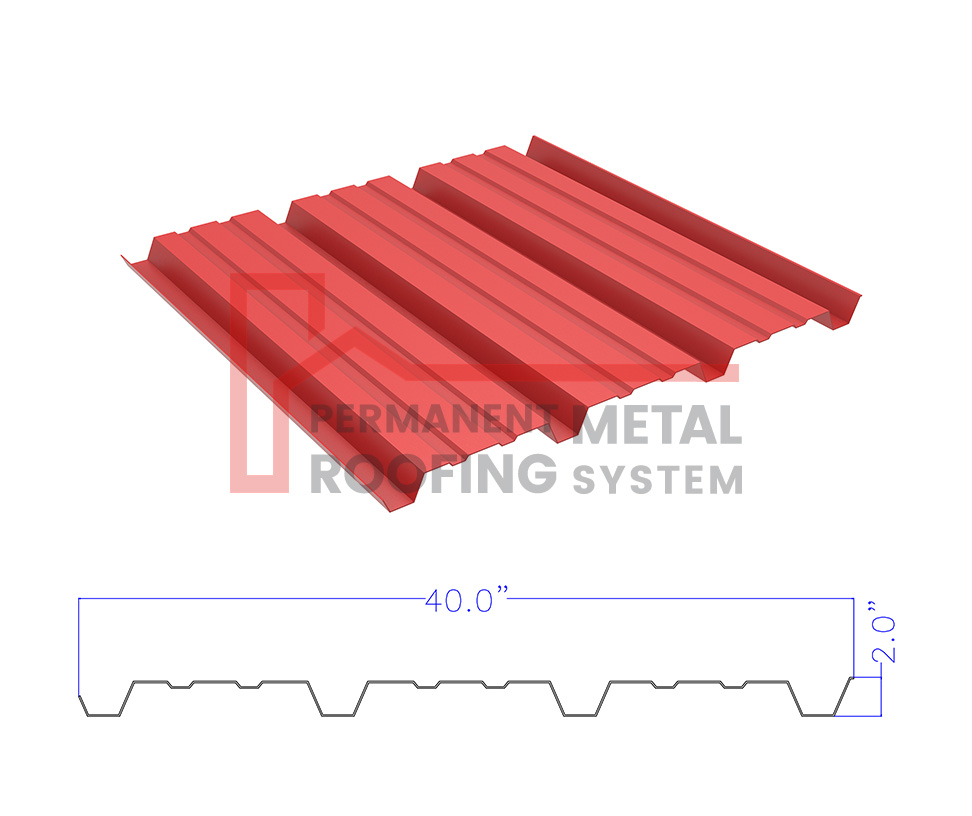
On standard PBR, each new sheet overlaps the last from one side. RPBR mirrors that, so the overlap comes from the other side. Once installed, the two look the same from the ground.
On the roof, that mirror image decides which end of the building the crew starts from and which way every lap faces. Get it wrong and the laps open toward the weather.
A naming caution: suppliers do not all use the label the same way. Some shops call PBR rolled upside down for walls “RPBR,” with the wide flats facing out. Your shop drawing states exactly which profile and edge you are getting.
When Do You Need a Reverse PBR Panel?
Only when the layout calls for it. If none of the cases below apply, standard PBR is the simpler order, and we will tell you which one fits during the take-off.
- Matching an addition to an existing building that was laid from the opposite end.
- Lapping away from the prevailing wind when the start end is fixed by the site.
- Working off a taller wall, lean-to or property line that dictates where panels begin.
- Wall runs where a supplier’s reverse-rolled version gives the face you want.
In DFW, spring storms push rain sideways, so lap direction is more than a detail. A lap facing into the wind invites water past the stitch screws. RPBR keeps the bearing leg under every lap even when the crew has to work backward.
RPBR Installation Notes
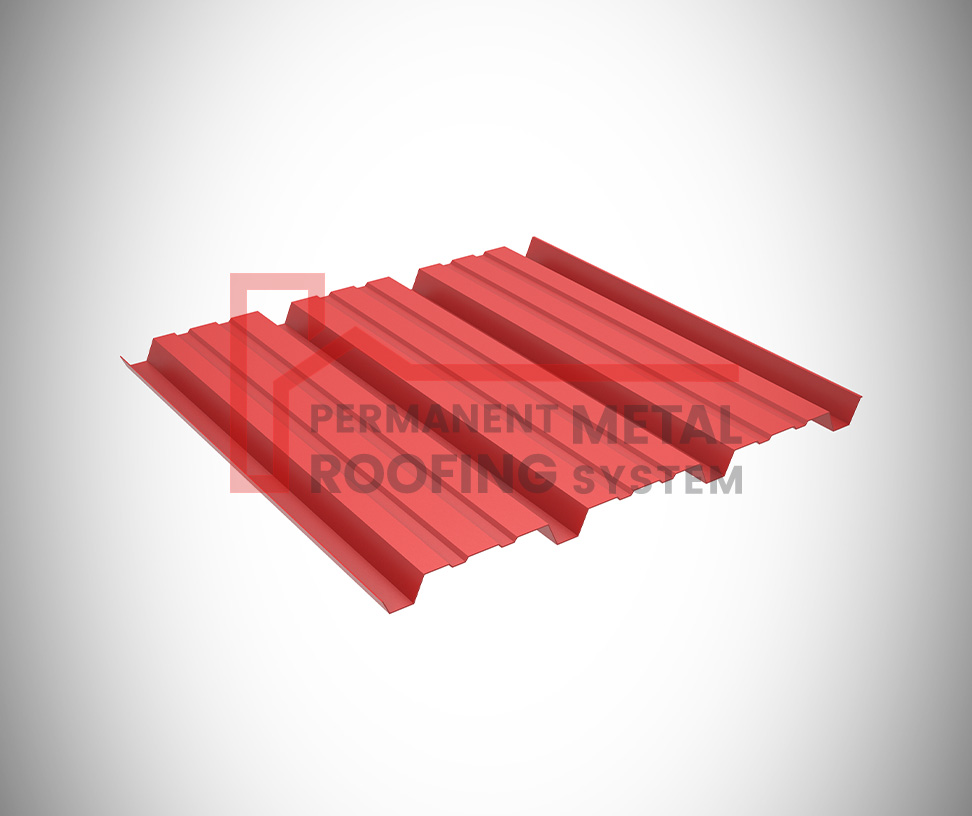
The main risk with RPBR is a mixed order. PBR and RPBR sheets will not nest together in one run, so we confirm the start end and lap direction on the drawing before anything is formed.
- Every run uses one profile from eave to ridge and end to end.
- Lap screws pin the leg to every purlin it crosses, and stitch screws tie the lap in between.
- End laps get butyl tape and land on a purlin.
- Profile-matched closures seal the eaves and ridges against pests and blown rain.
- Where steel sits on bare purlins, plan a vapor-retarder facing so dew does not drip indoors.
Upkeep matches PBR exactly. Look the screws over once a year; sun-baked washers usually earn their first swap in the second decade, roughly 10 to 15 years in. Weighing RPBR for a house? A standing seam roof avoids face screws entirely and floats on clips. The full family is on our exposed-fastener panel page.
RPBR Panel Questions
What does RPBR stand for?
RPBR means reverse PBR, and PBR stands for purlin bearing rib. RPBR has the same ribs and 36-inch coverage as PBR, formed so the bearing leg sits on the opposite edge and laps run the other way.
Can I mix PBR and RPBR on the same roof?
Not within a single run, because the laps will not nest correctly. Different roof areas can use different profiles when the layout demands it, as long as each run is one profile from end to end.
Is RPBR more expensive than PBR?
Pricing is typically the same or very close, since the steel, gauge and finish match. Availability can differ because suppliers form it less often, so we confirm lead time with your quote. Our metal roof cost guide covers what drives the total.
Is reverse PBR used for walls?
It can be. Some suppliers apply the RPBR name to PBR rolled with the wide flats facing out, which gives walls a different look. We spell out the exact profile on your drawing so the delivered panel matches what you approved.
Free Estimate
Send photos or drawings of the building, including any existing roof you need to match, and we will confirm PBR or RPBR and price the job.
Get Your Free Metal Roof Estimate
Tell us about your roof and a Permanent Metal Roofing Systems specialist will follow up to schedule your free estimate. No pressure, no obligation.
Prefer to talk now? Call (469) 466-2421.
Not Sure Whether You Need PBR or RPBR?
We will check your layout, wind exposure and any existing panels, then quote the right profile with trim and installation.