Questions and Answers
Metal Roofing FAQ for Dallas-Fort Worth Homeowners
This metal roofing FAQ answers the questions DFW homeowners ask us most: cost, hail and insurance, Texas heat, finishes, installation and warranty. The answers come from the team that forms the panels and installs them.
- Cost and value
- Materials and profiles
- Hail, wind and fire
- Heat and energy
- Installation
- Coatings and Tedlar
- Warranty
- Working with PMRS
- 20+ years of experience
- Lifetime limited warranty
- Free written estimates
Cost and Value
A Permanent Metal Roofing Systems metal roof costs more than asphalt on day one and usually less over the life of the house. Because we make the panels ourselves, we can publish real prices instead of a vague range.
Current price, updated October 2026: 24-gauge Galvalume standing seam with a Kynar 500 finish, installed on a house, starts at $15 per square foot of roof. Use the roof price calculator to see a full estimate with tear-off and add-ons.
How much does a metal roof cost in Dallas-Fort Worth?
Most DFW homeowners pay more for metal than for shingles, and the final number depends on roof size, pitch, tear-off, panel gauge and finish. We publish our installed price per square foot on the metal roof cost page and update it when material costs move. Steep roofs (8/12 and up), extra shingle layers, skylights and pipe boots add to the base price. Your free written estimate lists every line item, so you can compare it with other bids one item at a time.
Is a metal roof worth it in Texas compared with asphalt shingles?
For most owners who plan to stay in the house, yes. Asphalt shingles in Texas heat and hail often last around 15 to 20 years, while a well-installed metal roof typically lasts 40 to 70. Metal also resists wind uplift, takes hail without cracking and reflects more sun with cool-pigment finishes. The trade-off is price: metal often costs two to three times as much as asphalt up front. If you expect to sell soon, run the numbers carefully. Our metal roofing systems guide walks through every option.
How long does a metal roof last in Texas?
A professionally installed metal roof typically lasts 40 to 70 years in North Texas. Three things decide where yours lands: the metal and its thickness, the finish, and the quality of the details at valleys, walls and penetrations. Galvalume steel with a PVDF finish, concealed clips and high-temperature underlayment is the combination we build most often. Exposed-fastener panels can last a long time too, but their screws need checking every 10 to 15 years. See standing seam roofing for how the concealed system works.
Materials and Profiles
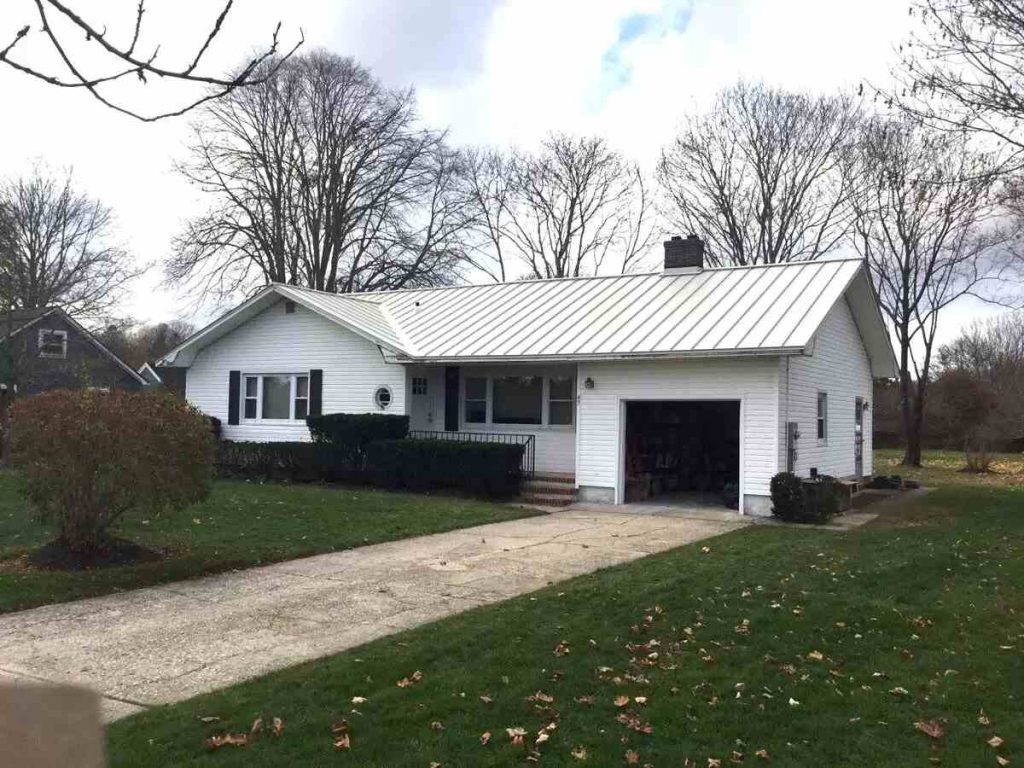
Galvalume steel standing seam is the right answer for most DFW homes, but PMRS also forms aluminum, copper and zinc. The profile, whether standing seam, shingle, shake or stone-coated tile, sets the look of the house.
Steel or aluminum: which metal is better for a Texas roof?
For most inland DFW homes, steel is the better value. We form 24- and 26-gauge Galvalume steel, which carries an aluminum-zinc coating that resists rust and costs less than aluminum. Aluminum in .032″ and .040″ never rusts and weighs less, so it suits roofs exposed to constant moisture or chemicals. It is a softer metal, though, and can show hail dents sooner than steel. Our steel vs. aluminum guide compares the two side by side.
When does copper or zinc make sense on a roof?
Copper and zinc suit owners who want a roof that ages naturally instead of holding one painted color. Copper weathers from bright penny to brown and, over many years, toward a green patina. Zinc develops a soft blue-gray surface. Neither has paint to fade. PMRS forms 16 and 20 oz copper and .7 and .8 mm Rheinzink zinc in mechanically seamed profiles, plus flat lock panels and diamond shingles for turrets and bays. Both metals cost well above steel, so most owners use them as accents.
How is standing seam different from metal shingles?
Standing seam uses long panels that run from ridge to eave, joined by raised seams that hide the clips and fasteners. It gives a clean, modern line with no exposed screws. Metal shingles are smaller interlocking pieces shaped like slate, shake or tile, which helps on traditional homes and in strict HOAs. Both handle hail and wind well when installed correctly. Compare them on our standing seam and metal shingle pages, or read snap lock vs. mechanical lock to choose a seam.
How does a metal shake differ from a metal shingle?
Both are interlocking metal pieces, and the difference is mostly the look. A metal shingle has a flatter face that reads like slate or a dimensional asphalt shingle. A metal shake has a deeper, textured face shaped like split cedar, which adds shadow lines across the roof. Shakes such as EDCO ArrowLine Shake suit ranch and rustic homes, while the Oxford Shingle fits traditional brick houses. Unlike real cedar, neither one rots, splits or burns. See ArrowLine Shake for an example.
How does metal compare with slate and tile roofs?
Slate, clay and concrete tile look handsome and last a long time, but they are heavy and can crack under large hail or foot traffic. A house framed for shingles often needs a structural review before it can carry tile. Metal weighs a fraction as much, does not crack, and can copy the look. Aluminum Slate Rock Oxford imitates slate, while Grandetile and DECRA Villa Tile give a Spanish-tile profile.
Should I choose stone-coated steel or standing seam?
Choose stone-coated steel if your HOA or your taste calls for the look of shake, shingle or tile, with a textured granule surface that hides minor hail marks. Choose standing seam if you want clean lines, the fewest seams and the easiest base for solar. Both are steel, and both can carry UL 2218 Class 4 impact ratings when the specific product has been tested. Our stone-coated steel vs. standing seam guide compares cost, hail behavior and upkeep.
Hail, Wind and Fire
Texas has ranked first in the nation for major hail events for 11 straight years in NICB counts, so storm performance is the first question most callers ask. Metal does not crack or shed granules, but it can dent, and no roof is storm-proof.
Will hail dent a metal roof?
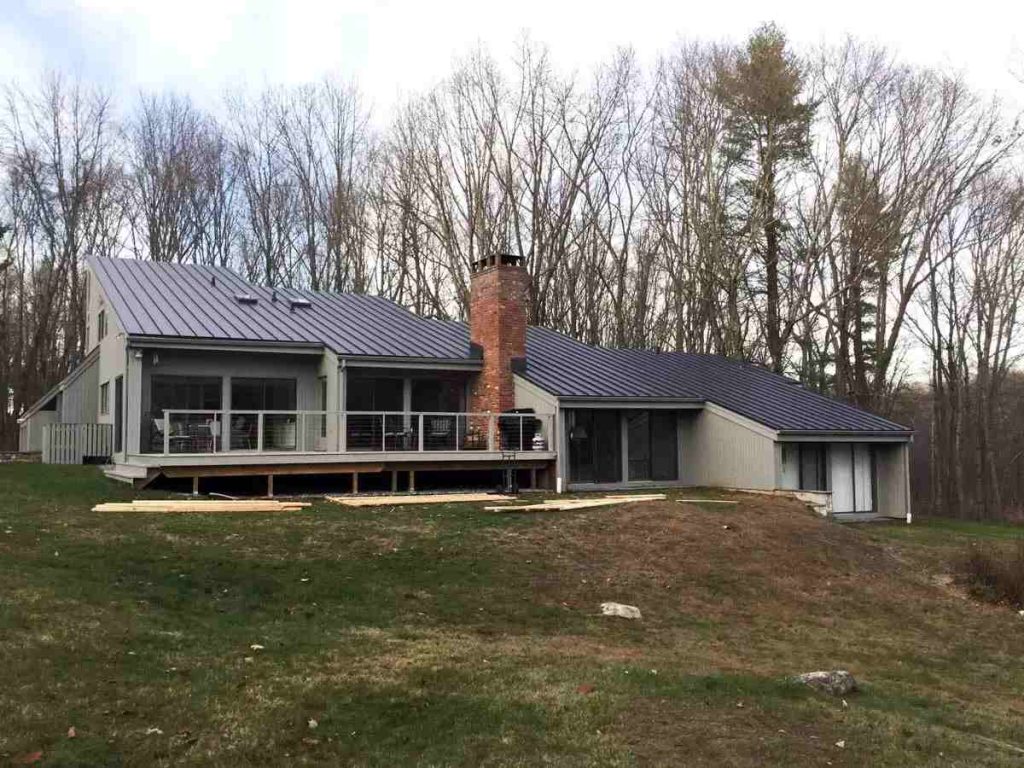
Large hail can dent any metal roof, but the dents are usually cosmetic: the panel keeps shedding water and the finish stays bonded. In an IBHS hail demonstration, standing seam metal took dents without punctures, while standard shingles cracked. Thicker 24-gauge steel, striated panels and stone-coated profiles hide marks better than thin, smooth panels. Check your policy for a cosmetic damage exclusion, because dents that do not leak may not be covered. Our Class 4 metal roofing page explains the ratings.
Will an impact-resistant roof lower my insurance premium in Texas?
It may, but no one can promise it. The Texas Department of Insurance says each carrier sets its own credit for roofs rated under UL 2218, with Class 4 earning the highest credit. TDI does not set the amount, so one carrier may offer a real discount and another very little. Ask your agent before you buy, and ask whether a cosmetic hail exclusion comes with the credit. Our Texas insurance discount guide lists the questions to ask.
How does a metal roof hold up in DFW wind storms?
Very well, when the panels and trim are fastened to the tested pattern. Recent North Texas storms brought gusts near 80 mph in May 2024 and straight-line winds above 100 mph in parts of Tarrant County in March 2025. Most wind damage starts at the edges, so we form eave, rake and ridge trim to match each panel. Standing seam panels lock to concealed clips along every seam, and mechanically seamed panels are folded shut for the highest uplift resistance. See mechanical lock standing seam for details.
Is a metal roof fire resistant?
Yes. Metal panels do not burn, and many metal roof assemblies earn a Class A rating, the highest, under the ASTM E108 and UL 790 fire tests. The rating applies to the tested assembly, including the underlayment and deck, so we follow the listed build-up. Wind-blown embers cause most wildfire home losses, and a metal roof with closed ridge and eave details gives them nothing to ignite on the roof surface. Read metal roofing vs. wildfire, hail and wind.
Heat and Energy
North Texas averages about 20 days a year at or above 100 degrees, and hot summers bring far more. The finish, the color and the attic ventilation decide how much of that heat reaches your living space.
Can a metal roof lower my cooling bills?
It can. Research by Oak Ridge National Laboratory and the Florida Solar Energy Center found that cool metal roofing can cut annual cooling energy by up to about 25 percent compared with dark asphalt shingles. Your result depends on color, insulation, attic ventilation and your air conditioner, so we never promise a number. Light colors and PVDF finishes with cool pigments reflect the most sun. See metal roof energy savings in Texas and our PVDF finishes.
Is a metal roof hotter or louder than shingles?
In most homes, neither. A cool-pigment metal roof reflects more sunlight than dark shingles, so less heat soaks into the attic, and the thin panels cool quickly after sunset. For noise, residential standing seam normally goes over a solid deck with underlayment and attic insulation below it. Rain on that assembly sounds much like rain on shingles. The loud tin-roof drumming people remember comes from panels on open purlins over an uninsulated barn.
Is a metal roof good for solar panels?
Standing seam is one of the easiest roofs for solar. Racking clamps grip the raised seams, so the installer does not need to drill through the panels, and the roof typically outlasts the solar array. Texas Property Code 202.010 also limits how far an HOA can restrict roof-mounted solar, with some exceptions. We can talk through seam height and panel layout with your solar installer before the array goes up. Learn more on our standing seam page.
Can I collect rainwater from a metal roof?
Yes, and metal is a popular surface for rainwater collection. Its smooth face sheds dust and leaves, and it has no granules to wash into the tank. Pair it with gutters sized for heavy Texas downpours, leaf screens and a first-flush diverter. Water for gardens and landscaping is simple to use. Drinking water needs filtration, disinfection and testing, and you should confirm with the finish maker that the coating suits potable use. We fabricate matching gutters and box gutters.
Installation
A metal roof is only as good as its details. Our crews follow the panel spec sheets for slope, deck, underlayment and clip spacing, and we bend the flashing and trim for each roof in-house.
What roof pitch does a metal roof need?
It depends on the seam. Our snap lock panels need at least a 3/12 pitch, which covers most DFW homes. Mechanically seamed panels are rated down to 1/2:12, so they suit low-slope porches, additions and commercial roofs, with high-temperature underlayment recommended at 3/12 and below. Metal shingles and stone-coated products follow their makers’ minimums. We measure the pitch at the free estimate. See snap lock and mechanical lock panels.
Can a metal roof go over my existing shingles?
Sometimes, but we usually recommend a full tear-off. Removing the old roof lets us inspect and repair the deck, fix soft spots and lay high-temperature underlayment on clean wood. Going over shingles can trap moisture, show bumps through flat panels and add weight, and local code limits how many layers a roof may carry. If an overlay is allowed and the deck is sound, we will price both ways. Our metal over shingles guide covers the trade-offs.
What underlayment goes under a metal roof in Texas heat?
A high-temperature underlayment. Metal panels run hot in a Texas summer, and ordinary peel-and-stick membranes can soften, stick to the panel or ooze at those temperatures. We use high-temperature self-adhered membranes such as PMRS HD PRO HT at eaves, valleys, low slopes and penetrations, with a synthetic underlayment across the field. That layer keeps water out if wind ever drives rain past a seam. See our roofing accessories for the products.
Does my HOA have to approve a metal roof?
You will usually still submit plans, but Texas law limits what an HOA can refuse. Texas Property Code 202.011 bars associations from prohibiting shingles designed to resist wind and hail, save energy or generate solar power. The shingles must resemble those approved in the subdivision, be more durable and of equal or better quality, and match the surrounding homes. Metal shingles and stone-coated steel often fit that test, while standing seam is less clear. See HOA approval for a metal roof.
Coatings and Tedlar
The finish decides how your roof looks in year 20. PMRS offers PVDF (Kynar 500 and Hylar 5000), SMP, textured crinkle finishes and Tedlar PVF film through Metal Alliance.
What is the difference between PVDF, SMP and Tedlar finishes?
All three protect the metal; they differ in how long the color lasts. SMP (silicone-modified polyester) is the budget paint and carries a 15-year coating warranty on our spec sheets. PVDF paints such as Kynar 500 resist fading and chalking far better, with 30-year warranties on solid colors. Tedlar is a PVF film bonded to the metal rather than a paint, with finish warranties of up to 50 years through Metal Alliance. For dark colors under Texas sun, we recommend PVDF or Tedlar. Compare our PVDF and Tedlar finishes.
What is Tedlar PVF film, and how has it been tested?
Tedlar is a polyvinyl fluoride film that DuPont introduced in 1961, so it has more than 60 years of field history. Metal Alliance reports that roof and wall panels finished with it are UL listed, carry Florida Product Approval and are approved for High Velocity Hurricane Zones, including Miami-Dade County. The film is dense and chemically inert. It resists UV, pollutants and mold growth, and it has very low VOC emissions. Read more on our Tedlar finishes page.
Does a Tedlar finish cost more than paint?
Usually a little. Tedlar-finished coil is a premium product, and depending on the supplier it can cost somewhat more than PVDF-painted metal. On a full roof, the finish is only one part of the price, next to labor, trim, underlayment and tear-off. Owners who choose Tedlar usually want its longer finish warranty and color stability, especially on dark or matte colors that would show fading. Ask for both options on your free estimate.
Can I match Tedlar panels years later or order a custom color?
Matching is one of Tedlar’s strengths. The film is made to a tight color standard from lot to lot and resists fading once installed. Panels ordered later for an addition or a repair should blend with the original roof. Stock colors ship fastest and keep schedules on track. On larger projects, Metal Alliance can review whether a film color outside the chart is available. Browse current options on our metal roof color chart.
Warranty
Metal roof coverage comes in layers: the installer’s warranty, the finish warranty from the coil coater and, on mechanically seamed systems, weather-tightness. Read each one, because they cover different things.
What warranty comes with a PMRS metal roof?
PMRS standing seam roofs carry our Lifetime Non-Prorated Limited Warranty, which covers material and labor. The paint or film carries a separate finish warranty from the coil coater. On our spec sheets that is 30 years for Kynar 500 or Hylar 5000 solid colors (35 on some low-gloss cool colors), 20 for metallics, 15 for SMP and 25 years on Galvalume Plus steel. Tedlar finishes reach up to 50 years. Metal shingles and stone-coated products carry their makers’ warranties. Full terms are on our warranties page.
What is a weather-tightness warranty?
A weather-tightness warranty covers leaks through the roof system itself, not only defects in the metal or the paint. It is available on our mechanically seamed systems when they are seamed to the spec sheet, with each seam folded closed by a seaming tool. Commercial owners, architects and low-slope projects ask for it most often. Terms depend on the project, so raise it at bid time. See mechanical lock panels and commercial metal roofing.
Working With PMRS
PMRS is both a manufacturer and an installer. The same company forms your panels, bends your trim and puts the roof on, which is why our estimates can be specific.
Does PMRS make its own panels and trim?
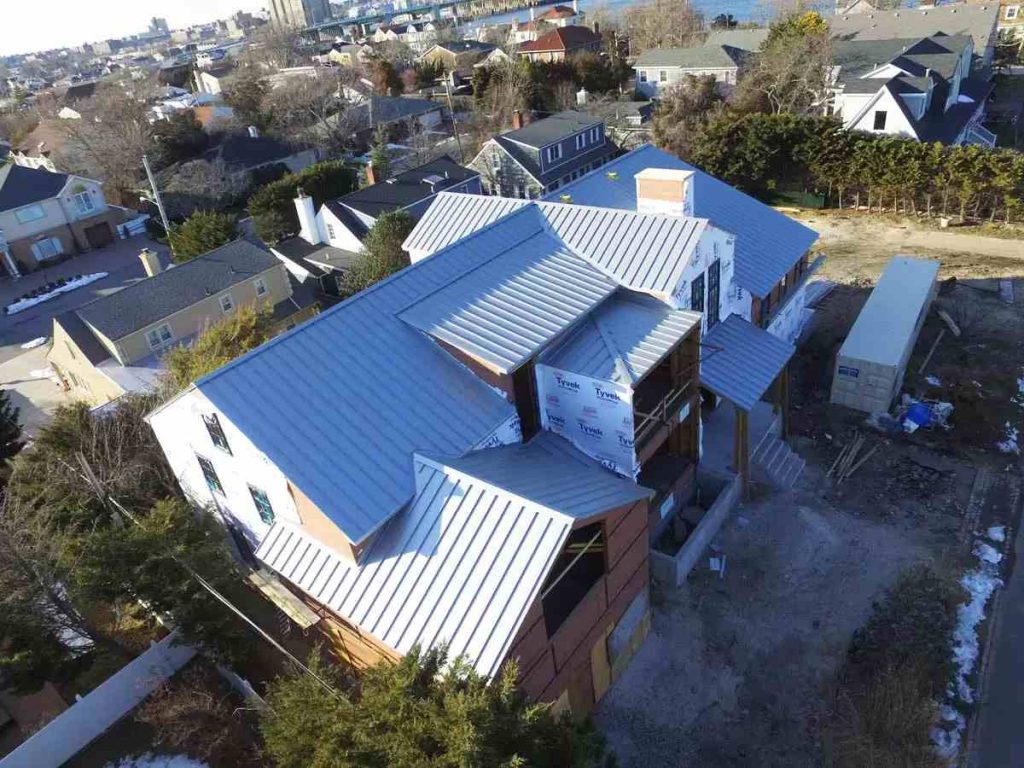
Yes. We roll-form standing seam panels on our own equipment and cut each one to the length of its roof run. Trim, flashing, coping and custom parts are bent on computerized equipment, which keeps every piece consistent and helps prevent crazing, cracking and oil canning. Controlling the whole system keeps quality up and cost down. Builders and architects can request spec sheets, shop drawings and submittals. See our services and the downloads library.
Will you waive or cover my insurance deductible?
No. Since September 1, 2019, Texas law has required the policyholder to pay the deductible on a property claim. A contractor who offers to waive, absorb or rebate it commits a Class B misdemeanor, and roofing contracts paid from insurance must carry a bold notice saying so. Any roofer who makes that offer is breaking the law and may cut corners elsewhere too. We give you an honest written estimate and leave claim decisions to you and your carrier.
Which areas do you serve, and how do I get an estimate?
We work across Dallas-Fort Worth from our Mesquite office, centered on east Dallas County. That includes Mesquite, Garland, Rowlett, Sunnyvale, Forney, Rockwall and Dallas, out to Plano, Frisco, McKinney, Arlington and Irving. Request a free estimate online or by phone. We inspect and measure the roof, talk through panels and colors, then send a written estimate with line items. See all service areas or our Mesquite location.
Get Your Free Metal Roof Estimate
Tell us about your roof and a Permanent Metal Roofing Systems specialist will follow up to schedule your free estimate. No pressure, no obligation.
Prefer to talk now? Call (469) 466-2421.
Free Estimates Across DFW
Still Have a Question About Your Roof?
Ask the people who form the panels. We will give you a straight answer and a written estimate you can compare line by line.